Close Quarters
Tree Removal Near the House in Rock Hill, Piece by Piece
Careful tree removal near the house in Rock Hill for trees over roofs, decks, fences and power lines. Every piece is cut and lowered under control, with no room left for guesswork.
Tree Over Roof Removal Without Damage
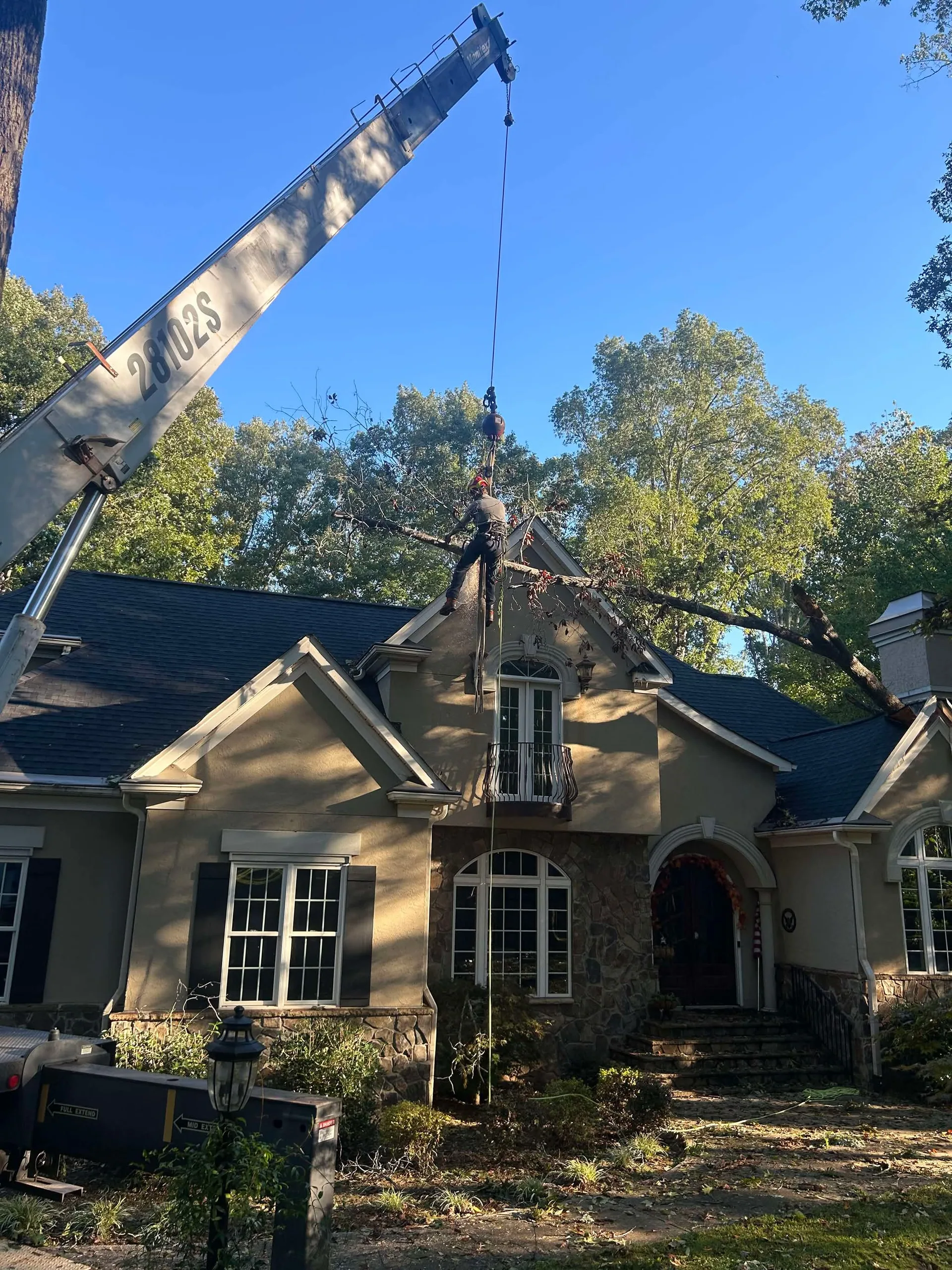
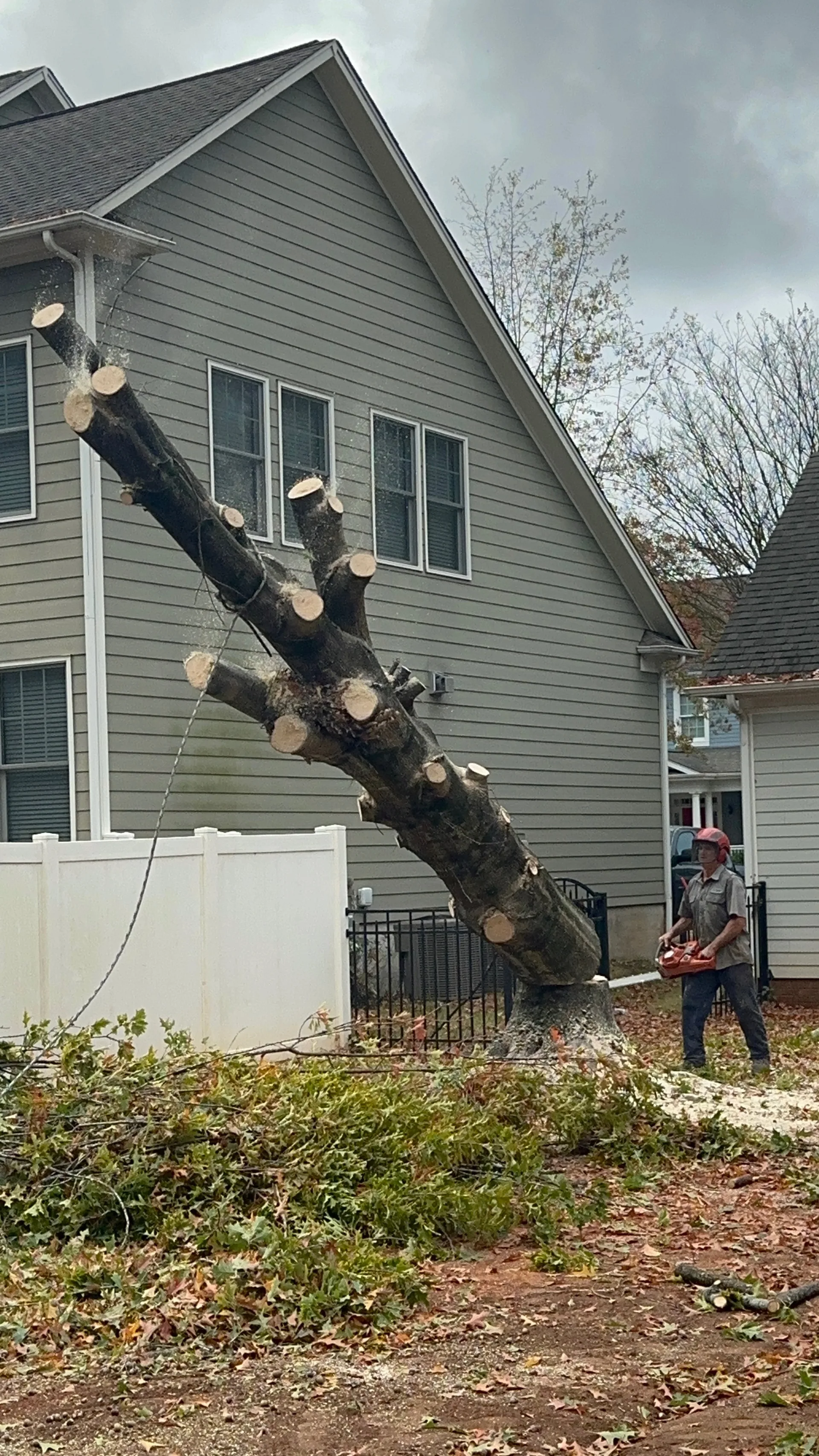
A tree over the roof is the most common close-quarters job we take on. Limbs that hang over shingles, gutters and chimneys cannot be dropped, so each one is roped, cut and lowered to the ground in a controlled swing that keeps it clear of the house.
Tree over roof removal starts with the limbs farthest out, working back toward the trunk, and it is the first step in most tree removal near the house in Rock Hill. Smaller branches come off first to give the crew room and a clear view, then the heavy wood is rigged and lowered. Once nothing hangs over the house, the trunk is taken down in short sections.
We look closely at the roof line during the estimate. Gutters, vents, skylights, satellite dishes and porch roofs all shape where ropes can run and where pieces can land. Planning for them ahead of time is what keeps the removal off your insurance claim list.
Tight Access Tree Removal in Backyards
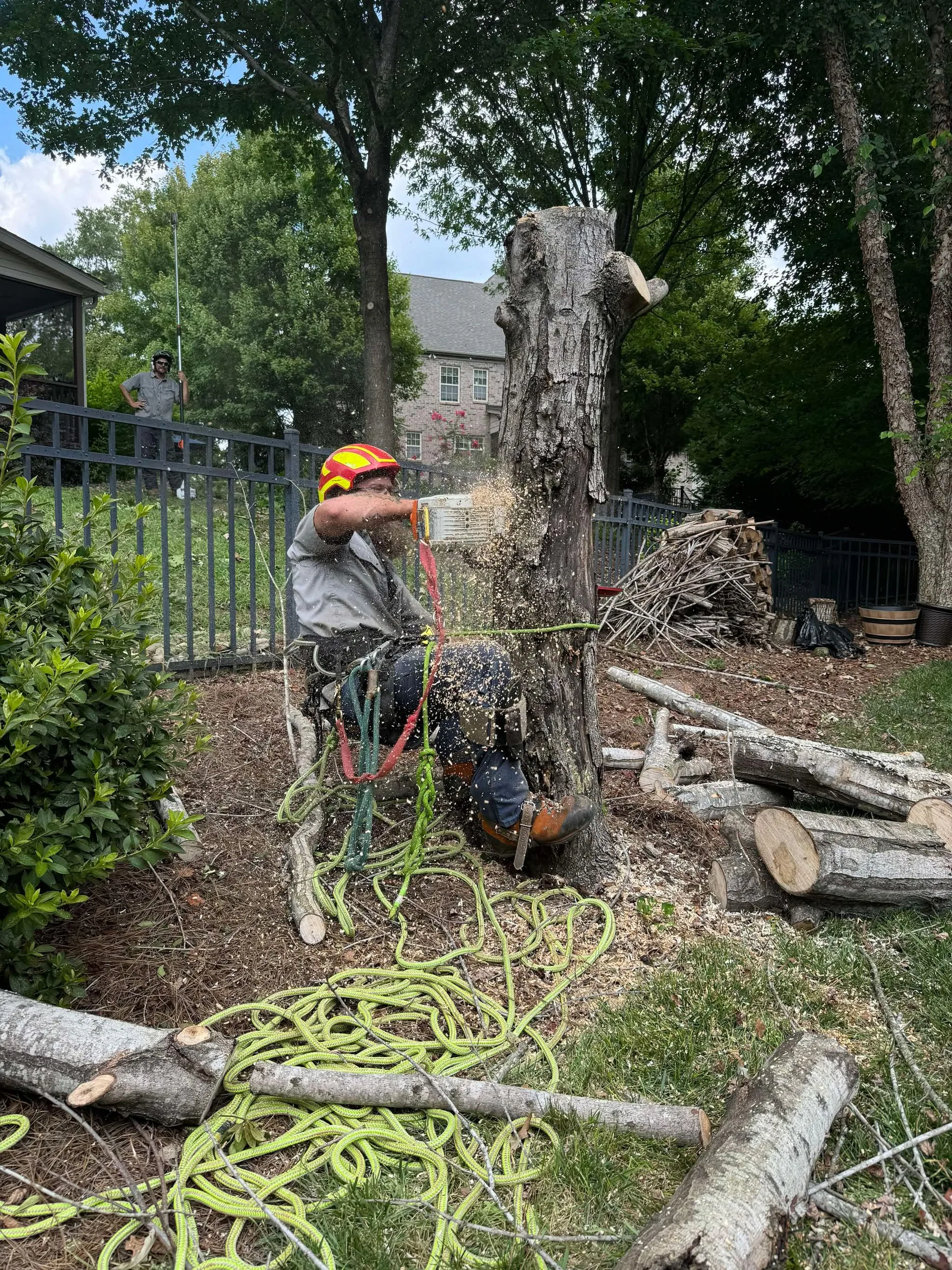
Plenty of trees stand where no truck can reach: behind a fence, past a narrow gate, between a house and a pool, or on a slope at the back of the lot. Tight access tree removal is built around those limits.
Our experienced climbers handle these trees with ropes and saddles, working their way up and taking the tree apart from the top down. Pieces are lowered into small landing zones, cut to a size the crew can carry, and moved out by hand or with compact equipment. Nothing is dragged across a garden bed or a patio.
When the gate is too narrow for the chipper, we carry the brush to the street and chip it there. A tight yard adds time, though it never stops the job. Our tagline is "Any Tree Anywhere," and the hard-to-reach trees are where it gets tested.
Tree Removal Near Power Lines Starts With the Utility
Trees growing into overhead wires need extra care. The South Carolina Office of Regulatory Staff advises that the utility should be contacted first before any tree work near power lines, and that homeowners should never try that work themselves.
When a tree near your house also touches the service line or the main lines along the street, we help you make that call before work begins. Depending on the situation, the utility may trim or clear the lines, drop the service line or schedule its own crew. We then plan our part of the job around what the utility has done.
Tree removal near power lines is never rushed. If a limb is already on a wire, keep everyone well away from it and from anything it touches, and report it to the utility right away.
Bucket Truck Tree Removal and When Climbers Take Over
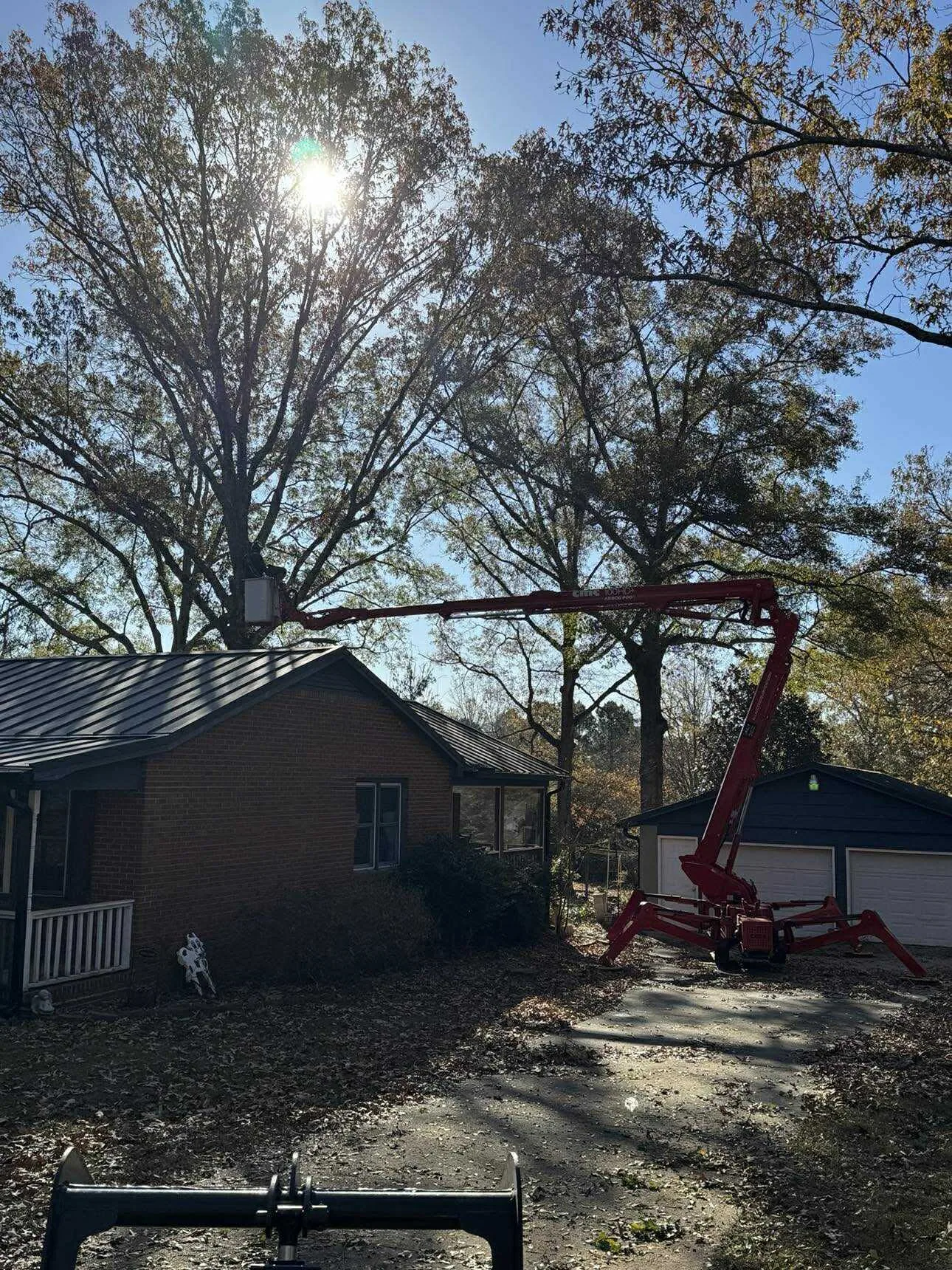
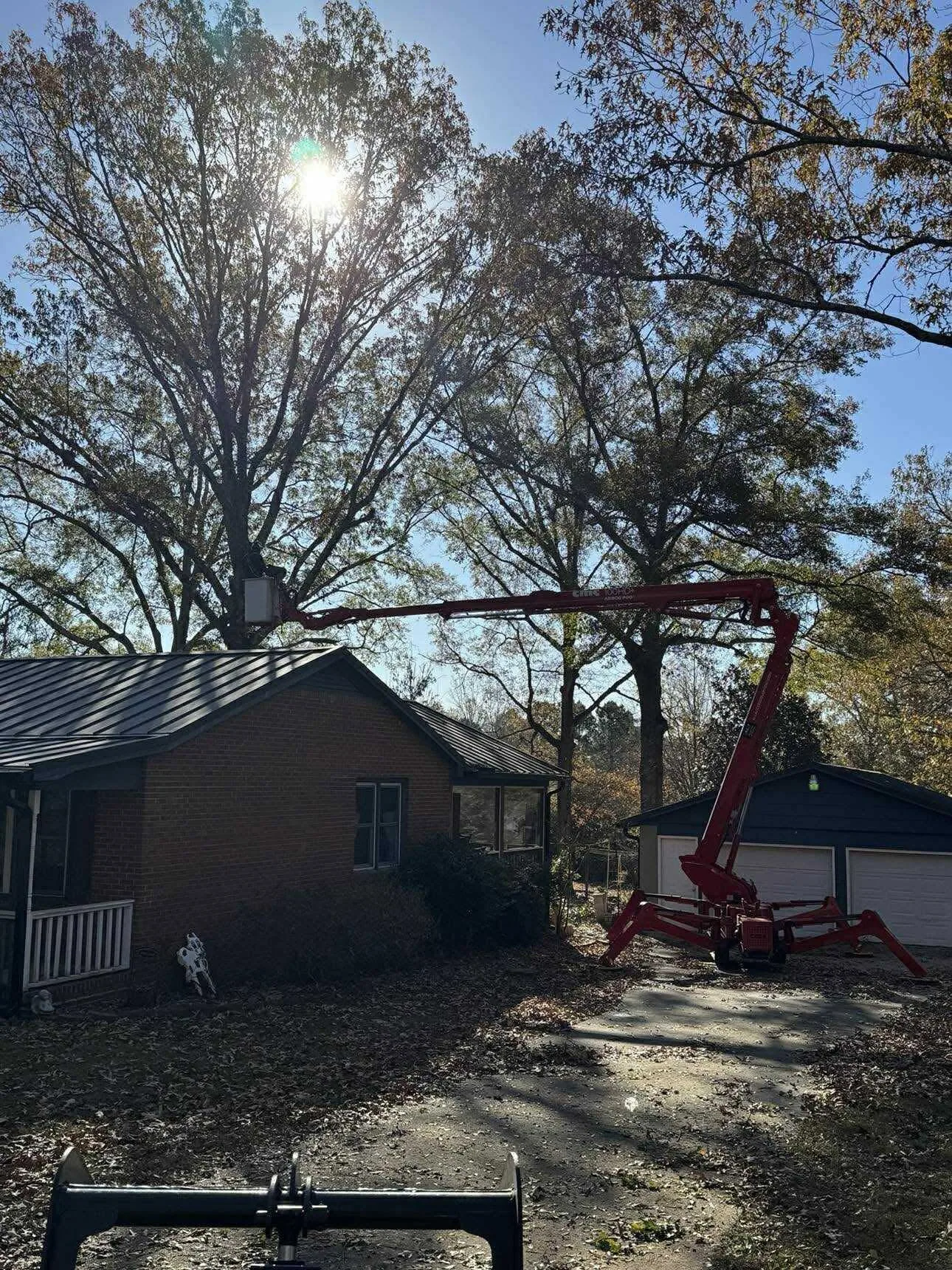
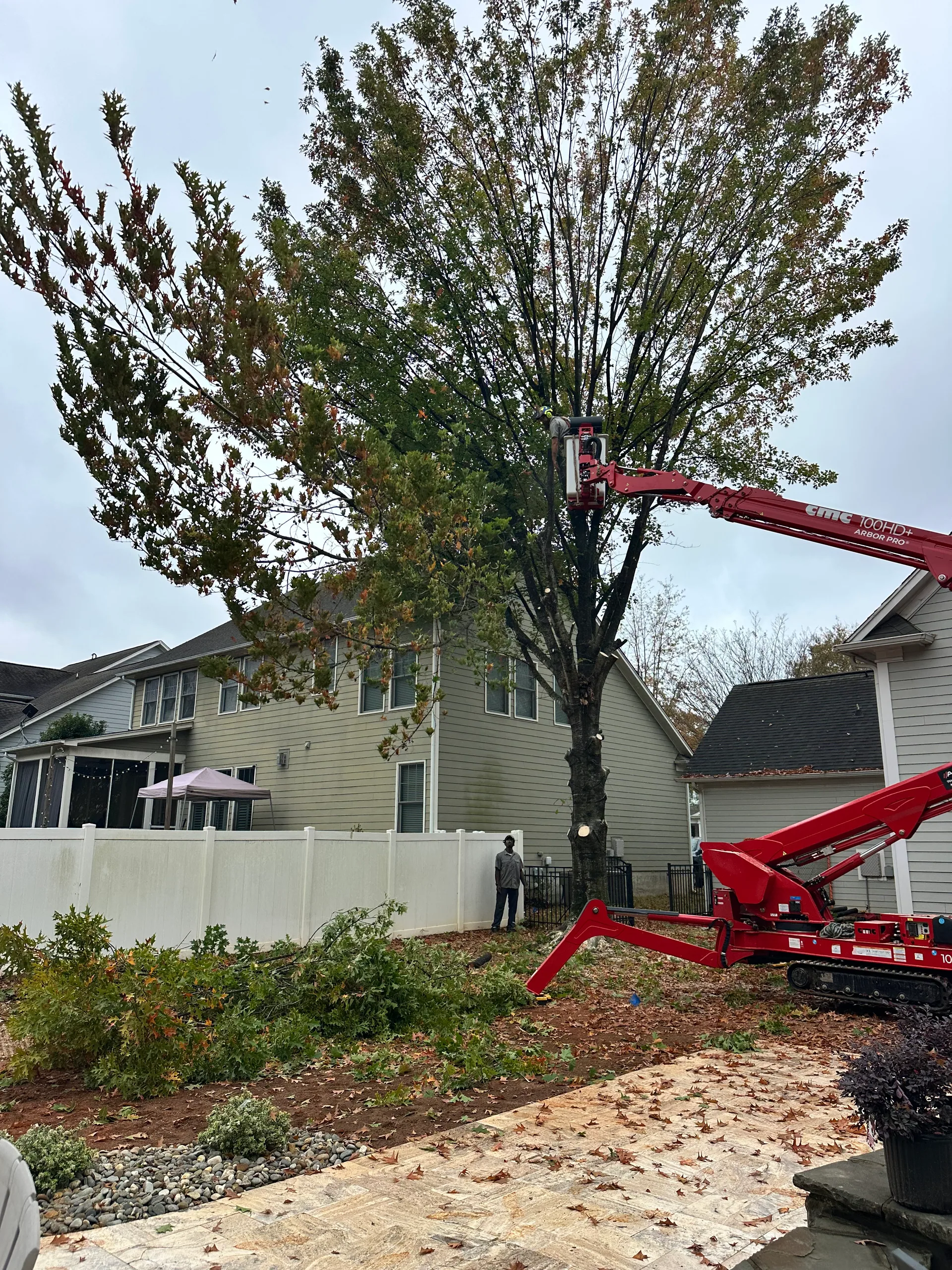
Bucket truck tree removal is our first choice when the truck can park within reach. The bucket lifts a crew member right beside each limb, which means nobody has to climb a tree leaning over a roof. It also gives the operator a clear view of the house, the wires and the ground below.
The truck needs a firm surface and a path to the tree. Driveways and streets usually work well. Soft lawns, septic fields, steep slopes and narrow side yards often do not, and those are the trees our climbers take on instead.
Many jobs use both. The bucket truck handles the limbs it can reach from the driveway, and a climber finishes the back of the crown that faces the yard. We decide on the mix at the estimate, so you know exactly how the work will go.
Step by Step
How Our Close-Quarters Removal Process Works
A tree beside a house leaves no margin for a wrong cut. Michael Smarr plans every close-quarters job himself and leads the crew on site, so nothing changes between the estimate and the work.
-
Measuring the Space
We note everything within reach of the tree, from the roof and gutters to fences, wires, sheds and decks, then quote the job in writing for free.
-
Setting the Rigging
Ropes and lowering points are set so each heavy piece swings clear of the house and lands in a planned spot.
-
Lowering Piece by Piece
Limbs and trunk sections are cut small and lowered one at a time until the tree is down to a safe stump.
-
Cleaning Up Close to Home
Brush is chipped, wood is hauled and gutters, decks and walkways are cleared of debris.
Protecting Fences, Driveways and Landscaping
Tree removal near the house in Rock Hill is judged by what is still standing when we leave. Before the first cut, we walk the yard and plan the landing zones and walking paths around everything worth protecting.
- Fences, gates and sheds
- Garden beds and shrubs
- Outdoor lighting and irrigation heads
- Play equipment and patio furniture
- Concrete driveways and walkways
Heavy pieces are lowered rather than dropped, and cleanup covers the roof, gutters and porch as well as the yard. The extra rigging and hand carrying add time compared with a tree in an open field, and that is reflected in the quote. Every estimate is free, includes our insurance certificate and gives you an exact price before work begins.
Tree Removal Near the House in Rock Hill and the Lake Towns
Lake homes and neighborhood lots both bring their own tight spaces, and we plan tree removal near the house in Rock Hill and the lake towns with the same care. Tega Cay sits on a peninsula on Lake Wylie, where trees between a house and the shoreline often have only a narrow strip of yard around them.
We handle tree removal near homes for customers in Tega Cay tree service, Lake Wylie tree service, Fort Mill tree service and Indian Land tree service. When a branch is the only problem, tree trimming in Rock Hill can clear the roof and keep the tree. If a tree has already come down on the house, our emergency tree removal in Rock Hill crew is the one to call. Other removals start with our main tree removal in Rock Hill, SC service.
Common Questions
Questions About Removing Trees Close to Homes
How close to my house can a tree be removed safely?
A tree touching the house can still be removed safely with the right rigging. The crew takes it apart from the top down, lowering every piece on ropes so nothing lands on the roof or walls. Distance changes the method, not whether the work is possible. The closer the tree stands, the smaller the pieces and the more time the job takes.
What happens if a piece hits my roof?
The plan is built so that pieces never touch the roof, with ropes controlling each limb as it is lowered. We are fully insured, and a copy of our insurance certificate comes with every quote, so you know the work is covered. Michael is on site during close-quarters removals to watch every cut over the house.
Do I need to call the power company first?
If any part of the tree touches or hangs over power lines, yes. The utility should be contacted before tree work near its lines, and it may need to trim, clear or disconnect the lines first. We point out any line conflict at the estimate and help you coordinate the timing so the removal happens once the lines are safe.
Can you remove a tree from a fenced backyard without taking down the fence?
Usually, yes. Our climbers take the tree apart in small sections and lower them inside the yard, then the crew carries the wood and brush out through the gate. Only in rare cases, such as a huge trunk with no gate wide enough, would a fence panel need to come off. We discuss that with you at the estimate.
Should I remove a tree just because it hangs over the house?
Not necessarily. A healthy tree with branches over the roof can often be kept by trimming those limbs back. Removal makes sense when the tree is dead, leaning toward the house, cracked or too large for the space. We look at the whole tree and give you an honest answer before quoting either option.
Protect Your Home
Get the Tree Beside Your House Down Safely
A tree leaning over your roof or growing into the wires is not a job for guesswork. Call us or send a service request, and Michael will plan the removal around your home and give you a free written quote.