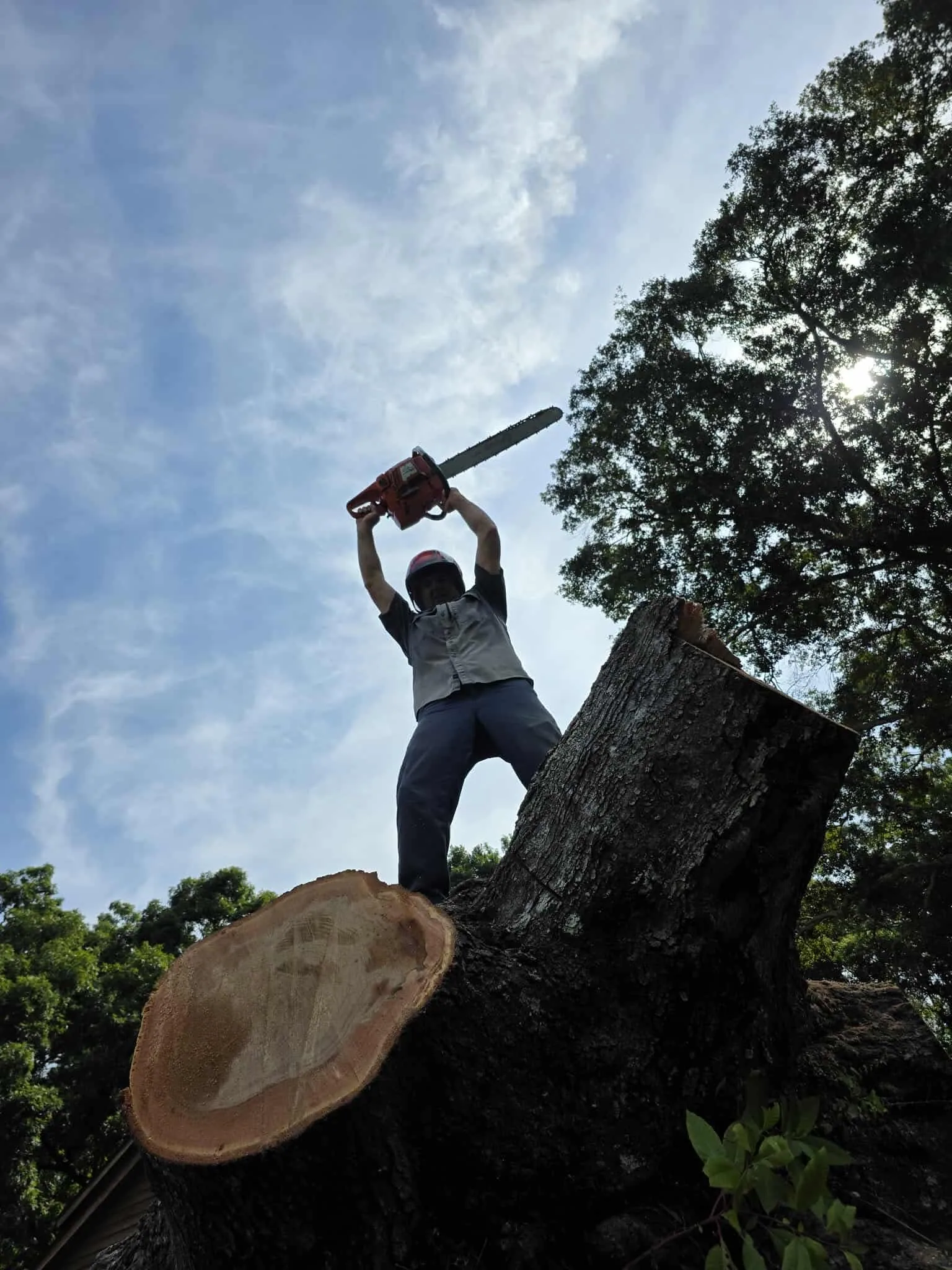
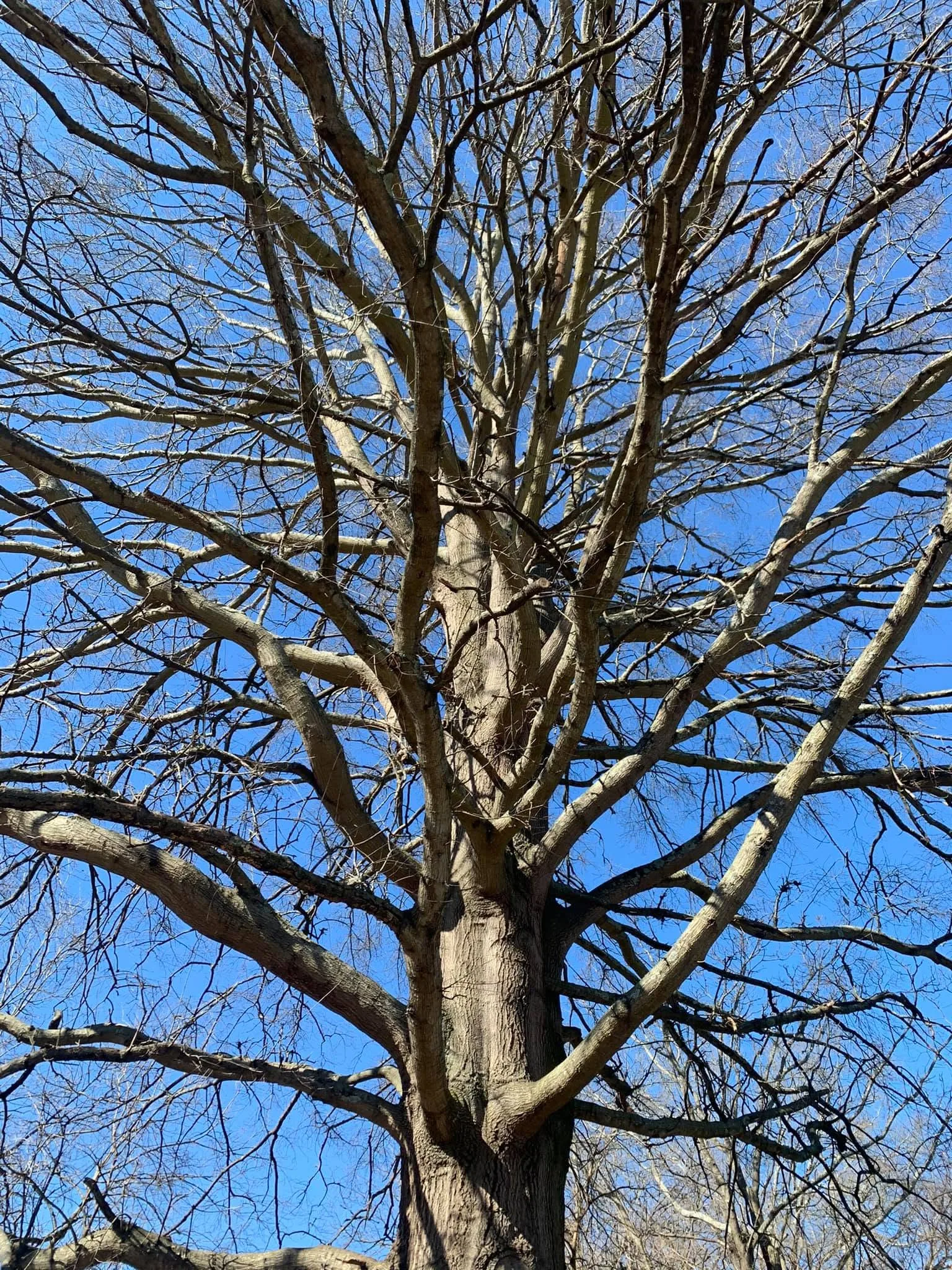
Large Oaks and Hardwoods
Oak Tree Removal in Rock Hill for Large, Mature Hardwoods
Oak tree removal in Rock Hill for big, spreading hardwoods that have outgrown the yard or started to fail. Heavy limbs are rigged down piece by piece, and the wood is hauled away.
Signs a Large Oak Has Reached Its Limit
Mature oaks are some of the most valuable trees on a property, and they are also some of the heaviest. When an old oak starts to decline, its limbs can weigh as much as a small tree, and a single failure can do serious damage. That weight is why oak tree removal in Rock Hill is planned with more care than almost any other job we do.
- Large dead limbs in the upper crown that drop bark and twigs
- Open cavities or hollow sections in the trunk or main limbs
- Fungus, conks or mushrooms growing at the base
- Cracks where big limbs join the trunk
- Thinning leaves over much of the crown in summer
- Root damage from digging, grading or construction nearby
An oak showing one or two of these signs may still be saved with careful pruning. When several appear together, especially over a house or a driveway, it is time for a closer look.
Water Oaks, Willow Oaks and Other Hardwoods
Not all oaks age the same way. The Clemson Home and Garden Information Center describes the water oak as more weak-wooded than most oaks and prone to wind and ice damage, adding that its trunks often rot by the time the tree is about 50 years old.
Willow oaks are tougher and adapt well to city conditions, according to the same Clemson fact sheet, though they can suffer root rot when planted in small urban spaces. White oaks, red oaks and other hardwoods such as maples and sweetgums each have their own weak points.
Knowing the species helps us read what the tree is telling us. A hollow in a water oak may mean something very different from the same hollow in a white oak, and that difference shapes our recommendation.
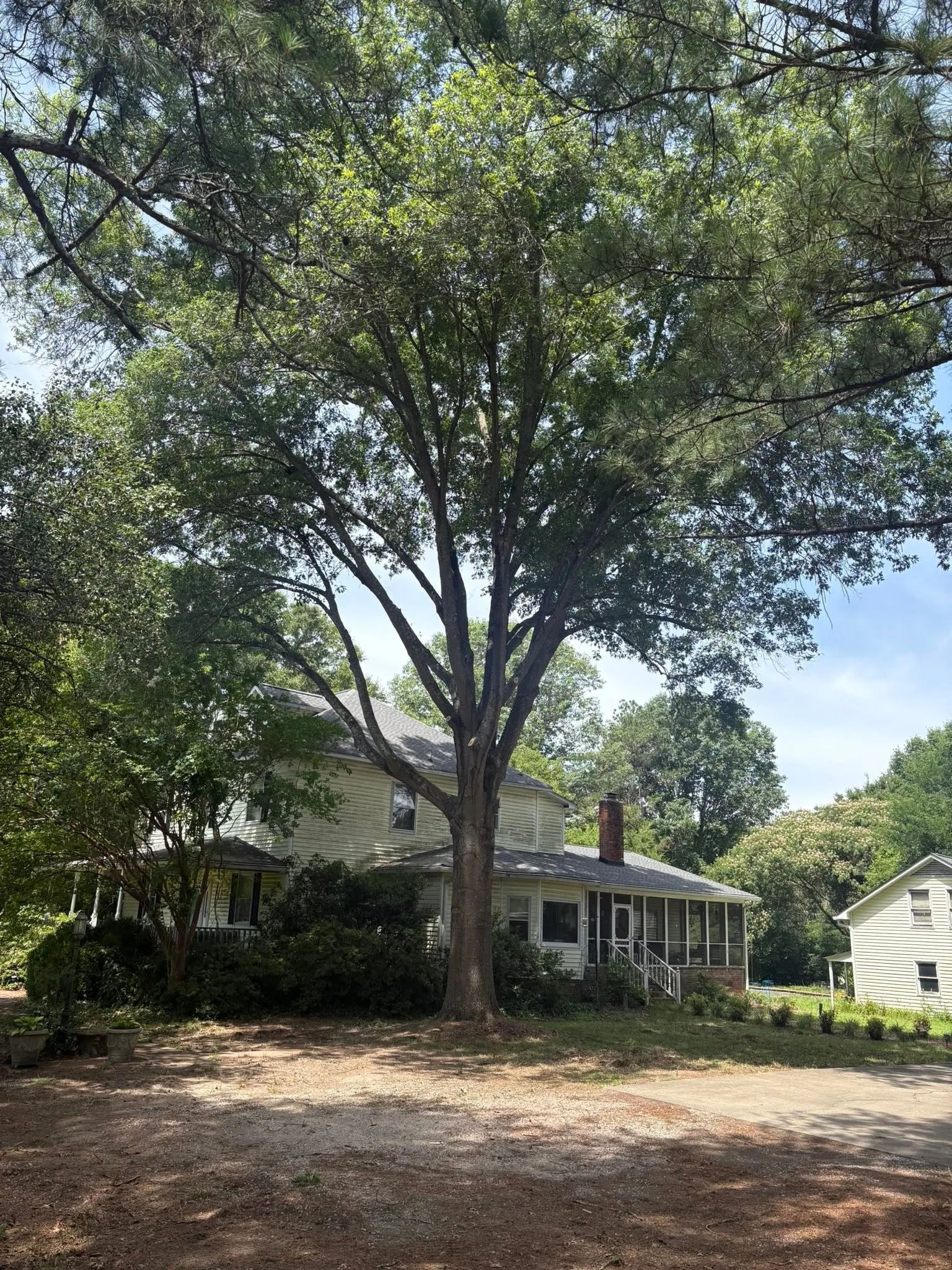
Large Tree Removal Takes Rigging and Planning
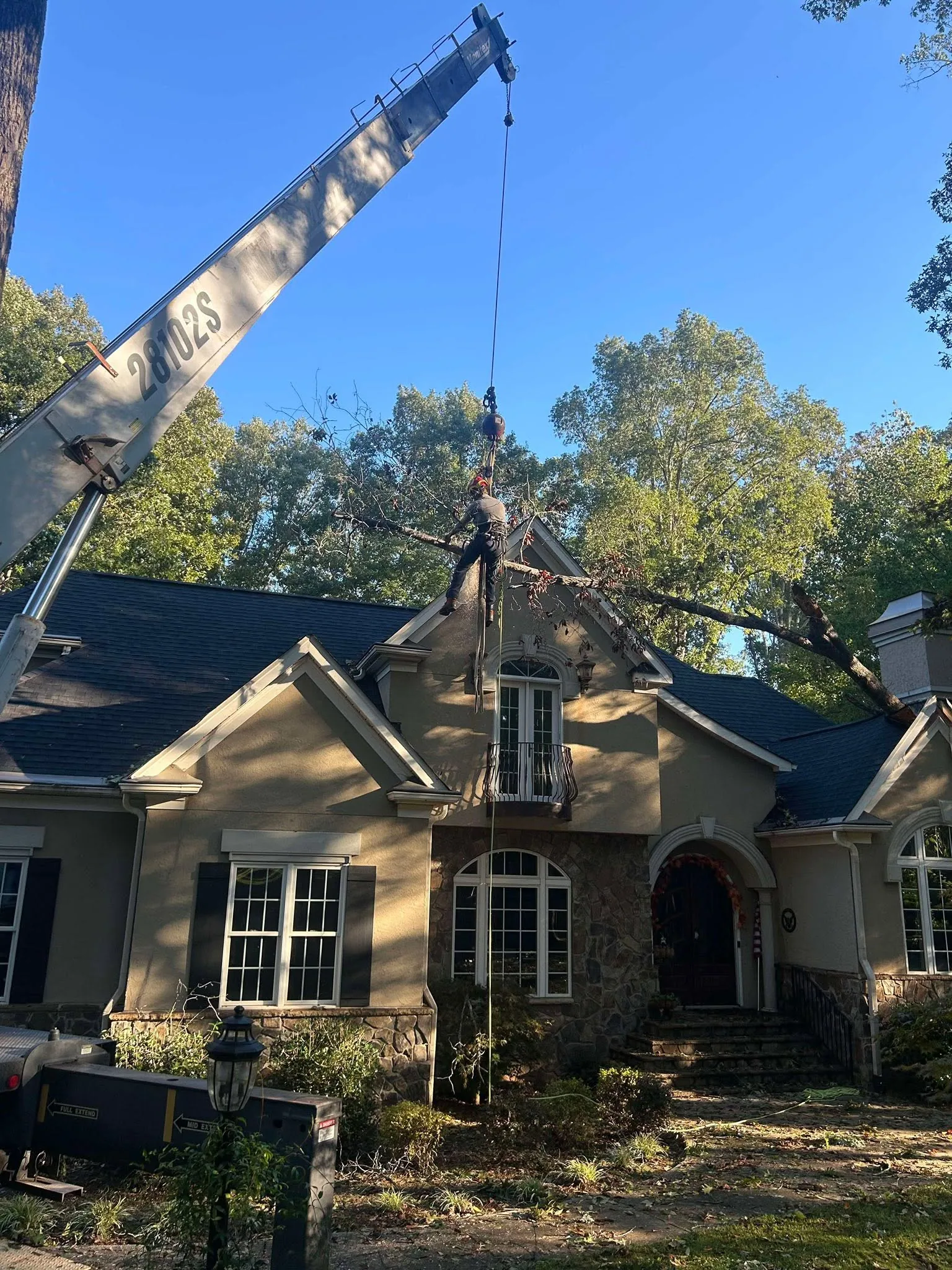
Large tree removal is rarely a matter of cutting at the base and stepping back. A mature oak spreads its limbs wide, often over a roof, a fence and a neighbor's yard at once. Dropping those limbs freely would damage everything beneath them.
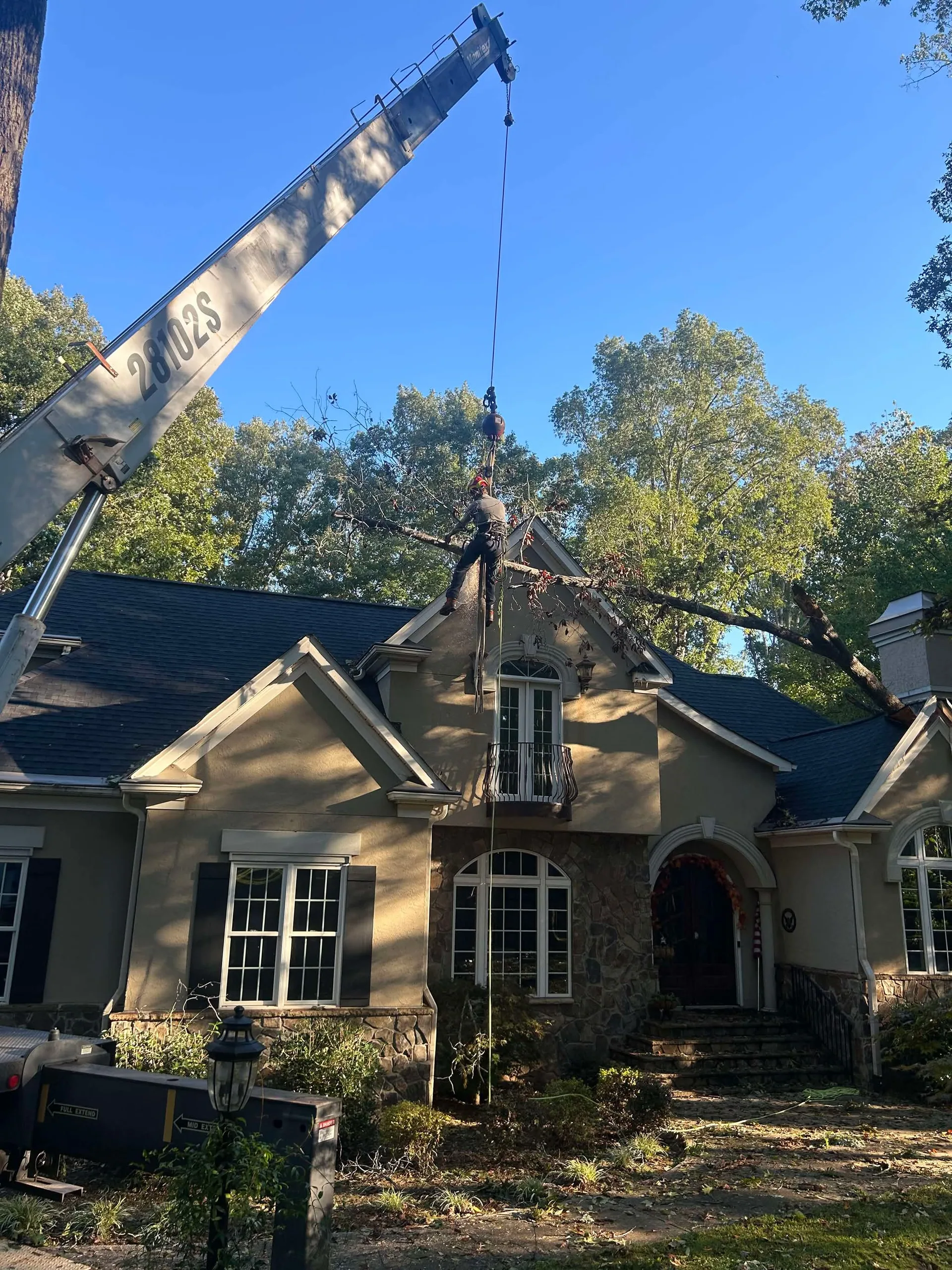
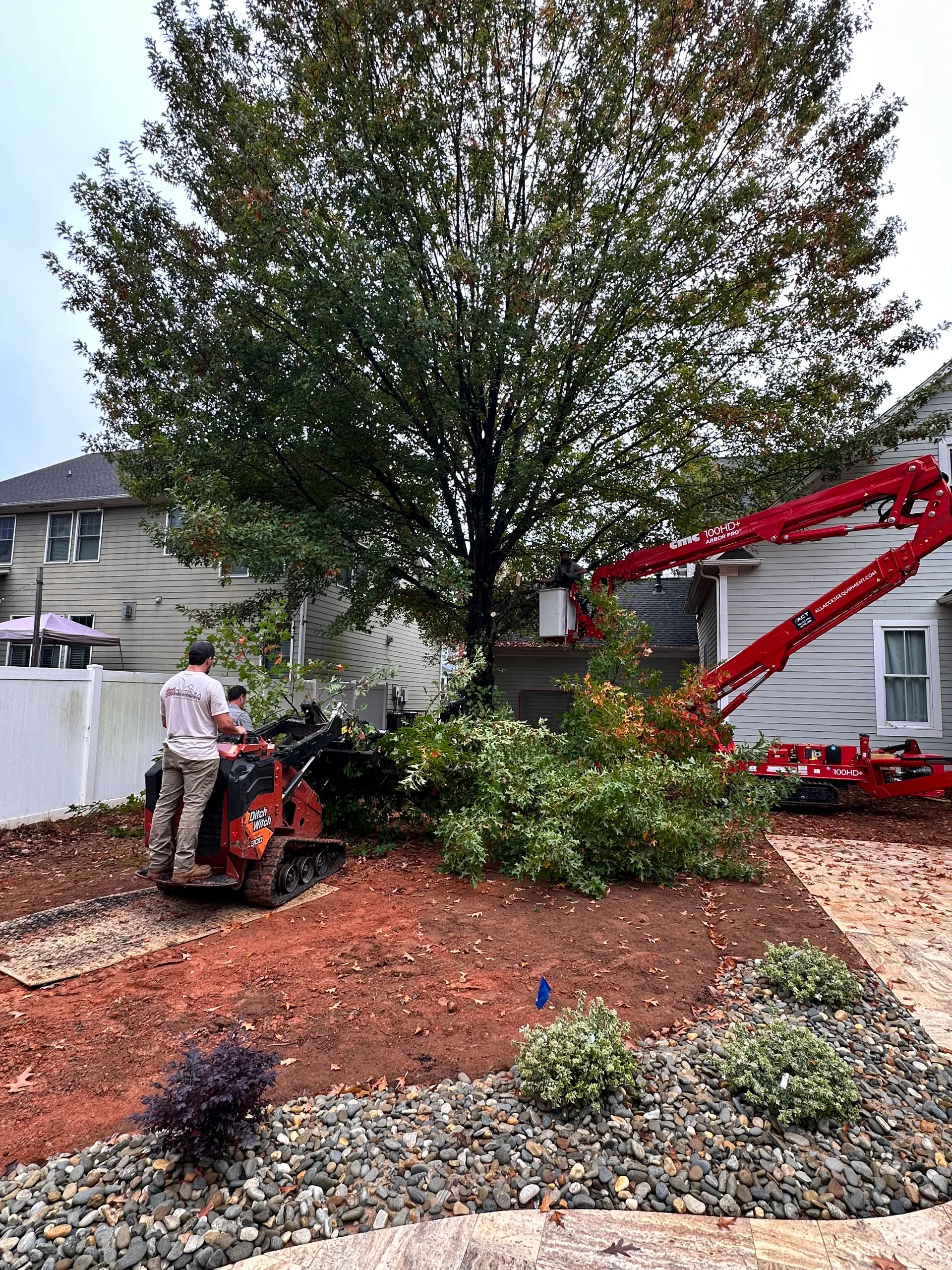
Our crews handle oak tree removal in Rock Hill in pieces. A climber or a crew member in the bucket truck ties off each heavy limb, cuts it free and lowers it to the ground on a rope. Once the crown is down, the trunk is cut into sections or felled whole if there is room.
Hardwood is dense and heavy, so moving the logs is a job of its own. Excavators carry trunk sections across the yard without dragging them through the lawn, and the smaller wood goes through the chipper. The plan for all of this is made at the estimate, before a single limb comes down.
Our Approach
Our Hardwood Tree Removal Process
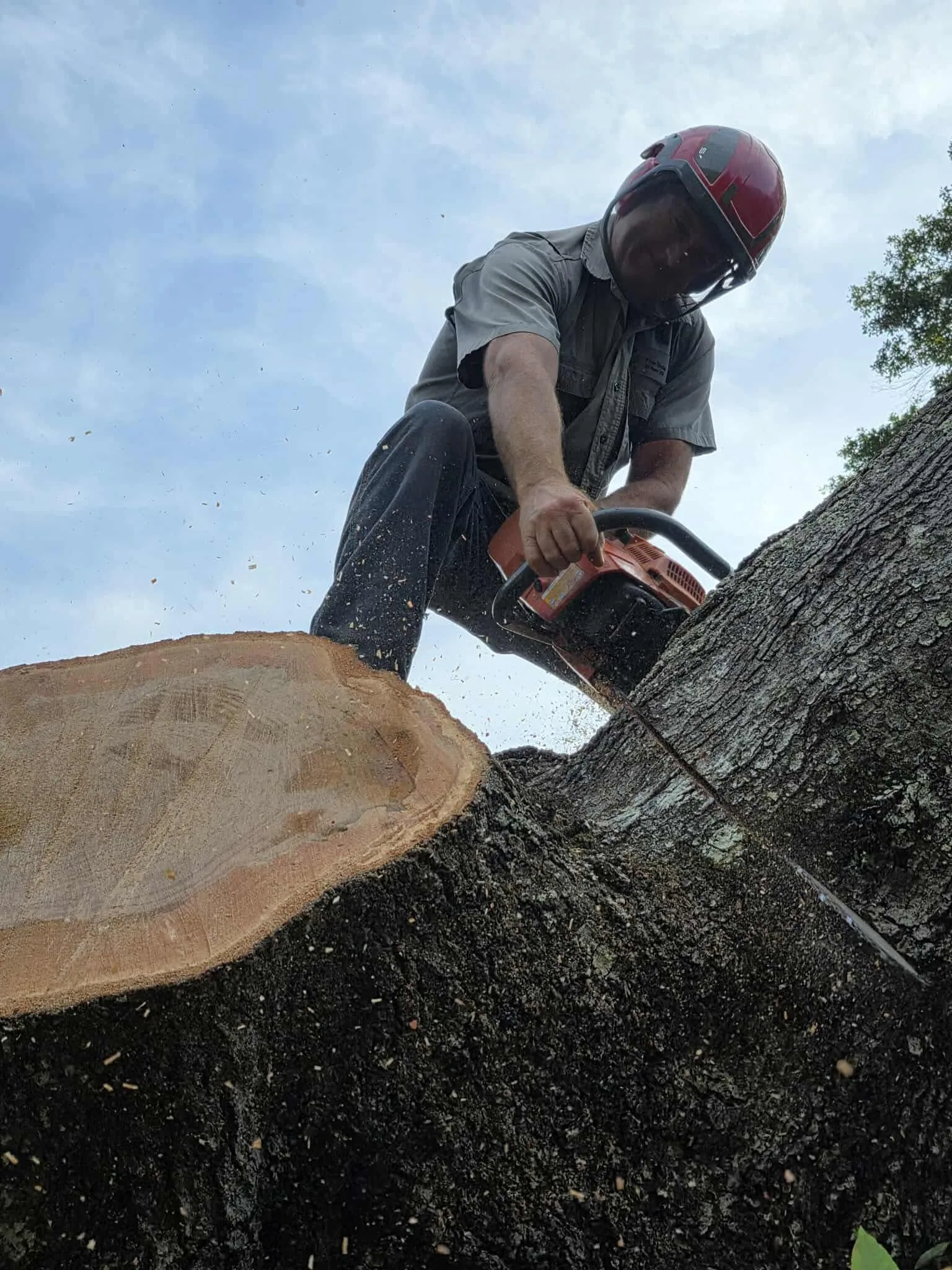
Hardwood tree removal follows a set order that keeps heavy wood under control from start to finish. Michael Smarr plans each job and leads the crew on site, so the plan is carried out by the person who made it.
-
Walkthrough and Quote
We look at the oak's size, spread, health and everything beneath the crown, then give you a free written quote with our insurance certificate.
-
Rigging the Crown
Heavy limbs are tied off, cut and lowered on ropes, working from the outer crown in toward the trunk.
-
Bringing Down the Trunk
With the crown removed, the trunk is cut into manageable sections or felled into a clear landing zone.
-
Hauling the Hardwood
Logs are moved with equipment, limbs are chipped and the yard is cleaned before the crew leaves.
What Drives Big Tree Removal Cost
Big tree removal cost comes down to size, weight and access. A broad oak with limbs over the house takes far more rigging time than one standing alone in a pasture. Trunk diameter matters as much as height, because thick hardwood is slow to cut and heavy to move.
Other factors include how many limbs must be lowered by rope, how close the bucket truck and excavator can get, whether the wood is sound or decayed, and how much material must be hauled. A large oak stump is also a big job, so adding grinding affects the total.
We do not guess at prices over the phone. Every quote is given on site, free of charge, so you see the exact number before deciding. Credit cards are accepted, and the price you approve is the price of the job.
Can the Oak Be Saved Instead?
Sometimes the honest answer is yes. A large oak with a few dead limbs, a heavy side or branches resting on the roof can often be kept with careful pruning. Removing deadwood, reducing weight on long limbs and raising the canopy can give a healthy oak many more years.
We look at the whole tree before recommending removal. If professional tree trimming in Rock Hill will make the oak safe, Michael will say so at the estimate and quote that work instead. Our goal is the right call for your property, not the largest job.
When decay has reached the trunk or the root collar, or when the oak sits too close to the house to be safe, removal is the better choice. In those cases stump grinding in Rock Hill can follow, so the space is ready for a new tree or a new use.
Oak Tree Removal in Rock Hill and Surrounding Towns
Large oaks and hardwoods stand in town yards and on farm properties alike, and big trees close to houses are some of the most common removals we plan. Each one is quoted on site after a full walkthrough.
We remove oaks and other hardwoods for homeowners in Rock Hill tree service, Fort Mill tree service, Lancaster tree service and Indian Land tree service. Our home base in Edgemoor keeps us close to customers throughout York County.
Wherever the oak stands, every quote for oak tree removal in Rock Hill and the nearby towns includes a copy of our insurance certificate and complete cleanup. Removals of other kinds of trees fall under our main tree removal in Rock Hill, SC service.
Common Questions
Large Oak Removal Questions
Why do old water oaks fail so often?
Water oaks grow quickly but have weaker wood than most oaks, which makes them more likely to lose limbs in wind and ice. They also resist decay poorly, so wounds and old pruning cuts can lead to rot inside the trunk. An older water oak can be hollow at the core even when its crown still looks full.
How long does it take to remove a large oak?
The time depends on the tree's size, how many limbs must be lowered by rope, how close it stands to the house and how far the wood must be carried to the trucks. A big oak with open access goes faster than one wedged between a roof and a fence. We give you an estimate of the time at the walkthrough, along with the quote and the equipment plan.
Is the oak stump removed along with the tree?
Stump grinding is a separate service that we can add to any oak removal quote. A large oak leaves a wide stump and spreading surface roots, so grinding it below grade is what lets you mow, plant or build over the spot again. If you plan to leave the stump for now, we cut it low and clean up around it.
Will removing a big oak damage my driveway or lawn?
We plan the removal to protect hard surfaces and turf. Heavy pieces are lowered on ropes rather than dropped, and logs are carried with equipment instead of dragged. On soft ground we choose routes that avoid ruts. We point out any area of risk at the estimate so there are no surprises on the day of the work.
Is a hollow oak always dangerous?
Not always. Trees can stay standing with some hollow wood, because strength comes largely from the outer shell of the trunk. The danger grows as the hollow widens and the remaining wall thins, especially when the tree also leans or has a heavy crown over a house. We check the size and location of the hollow before recommending removal.
Plan Your Oak Removal
Ready to Deal With That Big Oak?
A declining oak over your home is too heavy to leave to chance. Call us or send a service request, and Michael will walk the property, give you an honest trim or remove answer and quote the work for free.