Hazard Trees
Hazardous Tree Removal in Rock Hill Before the Tree Fails
Hazardous tree removal in Rock Hill for dead, dying, cracked and leaning trees that threaten a home, a driveway or the people using the yard. We assess the risk honestly and remove it safely.
Warning Signs of a Hazard Tree
A hazard tree is one with a defect that could make it fail, standing close enough to hit something that matters. Most of the warning signs that lead to hazardous tree removal in Rock Hill are visible from the ground if you know where to look.
- A cracked tree trunk or a long split running down the bark
- Large dead limbs high in the crown, sometimes called widowmakers
- Mushrooms or fungus growing at the base or on the trunk
- Bark falling away in sheets and leaving bare wood
- Soil heaving or cracking on one side of the root zone
- A hollow sound or an open cavity in the main stem
One sign alone does not always mean a tree must come down. Several together, or any of them above a roof, a play area or a parked car, deserve a close look soon.
Dead Tree Removal and Dying Tree Removal
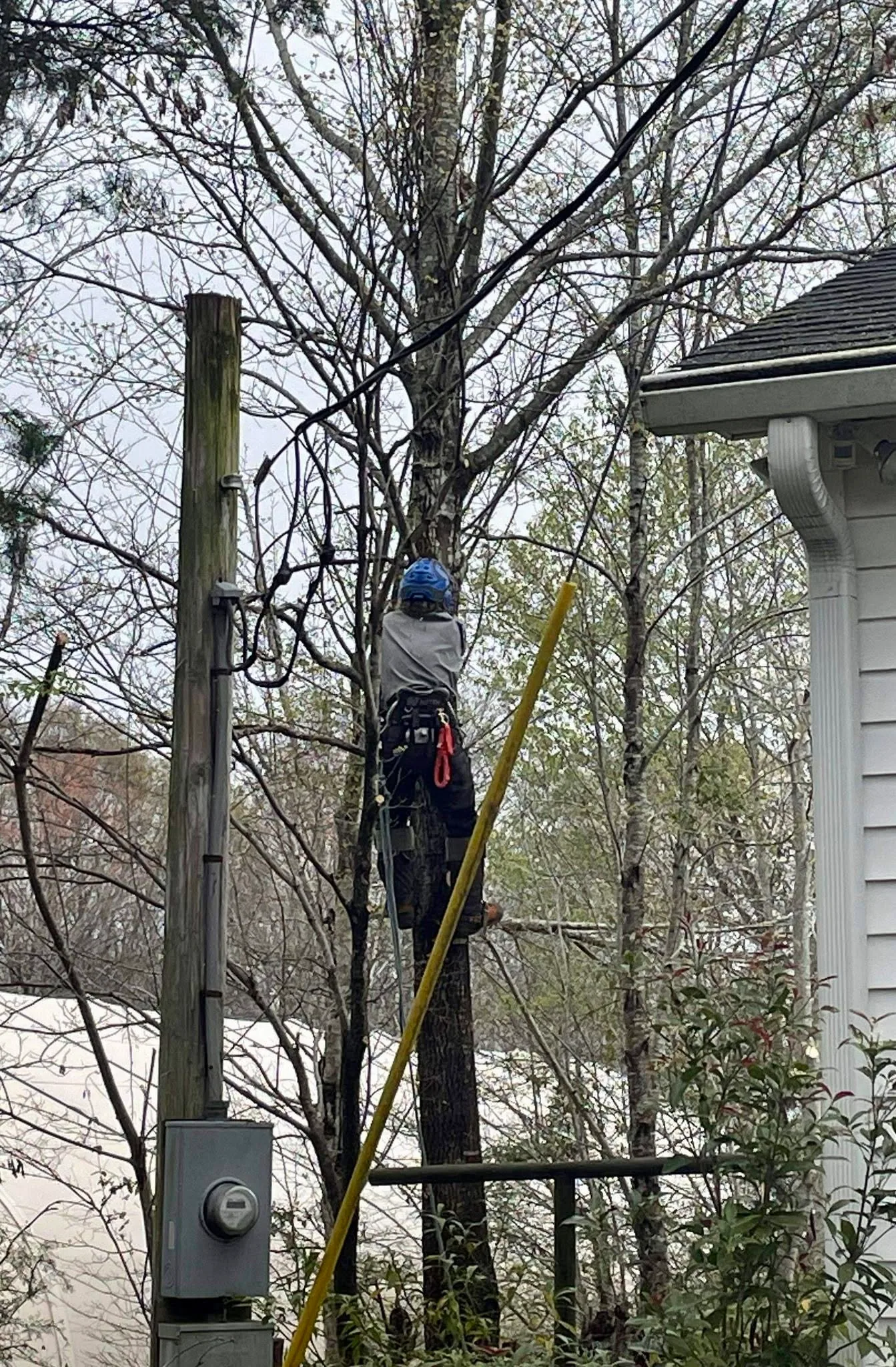
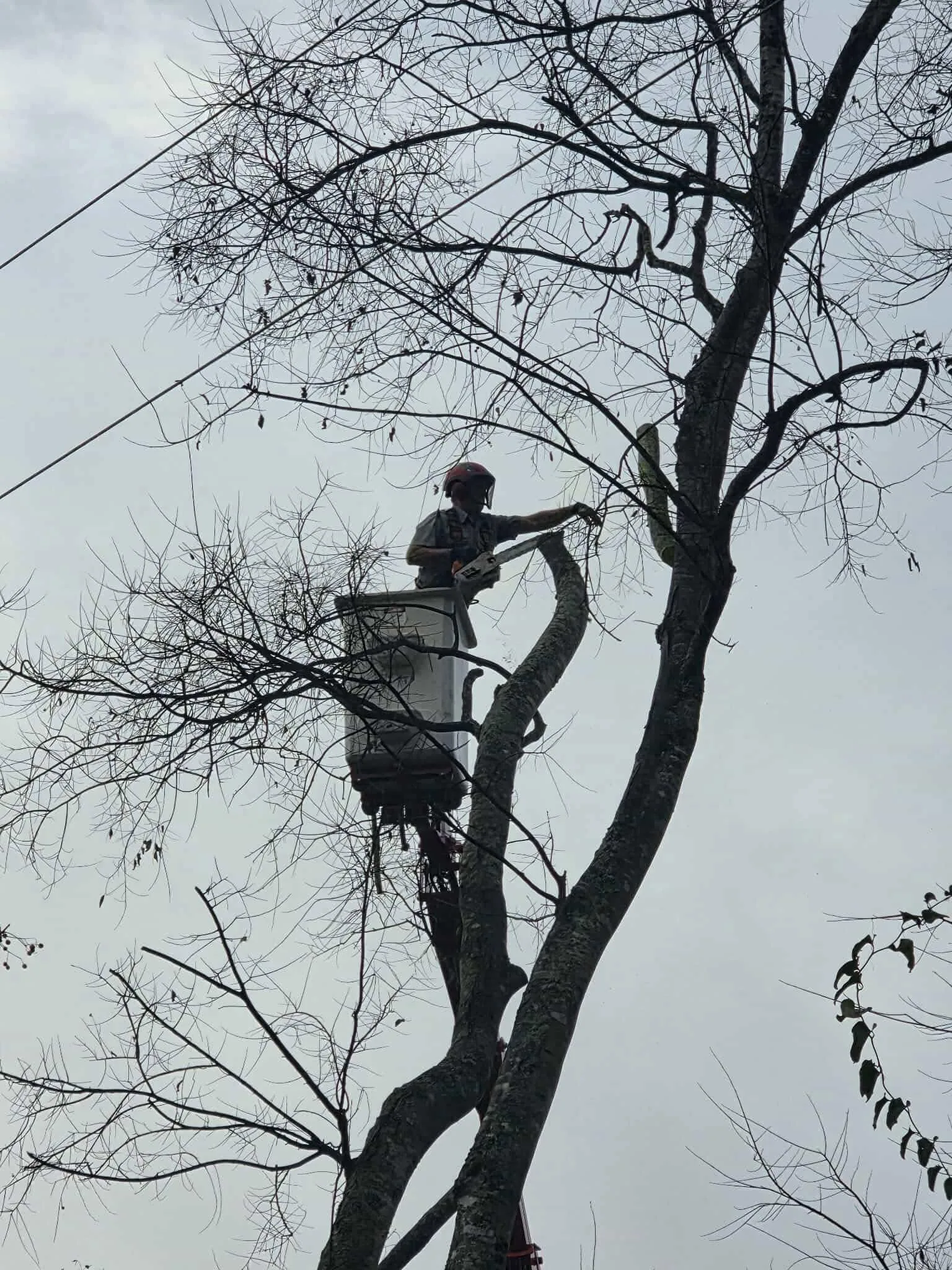
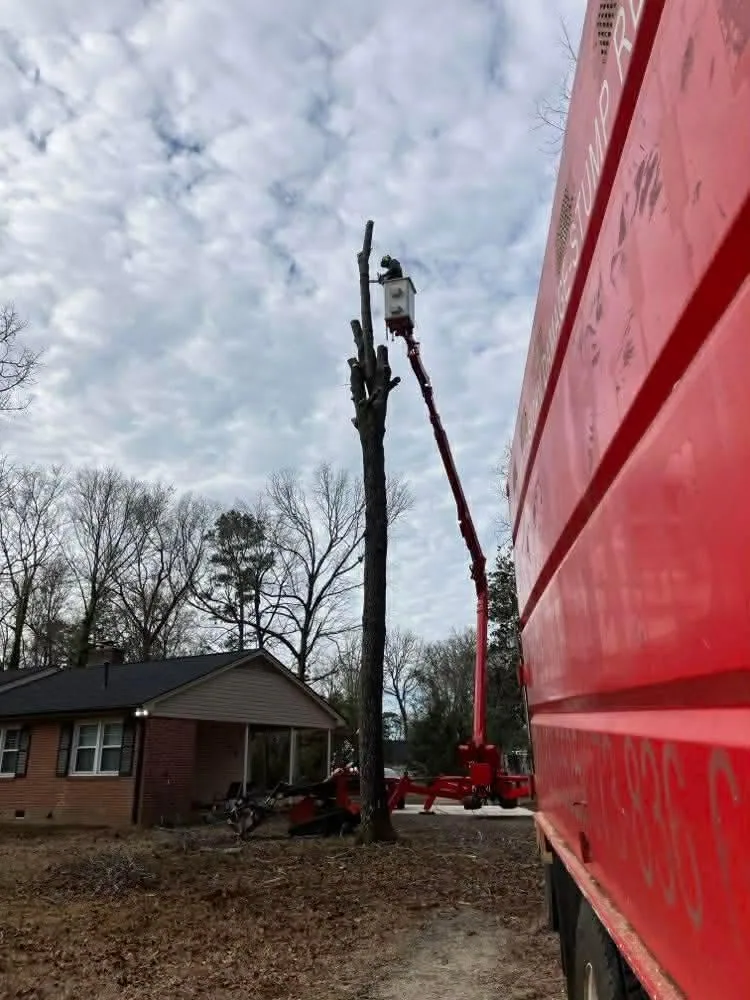
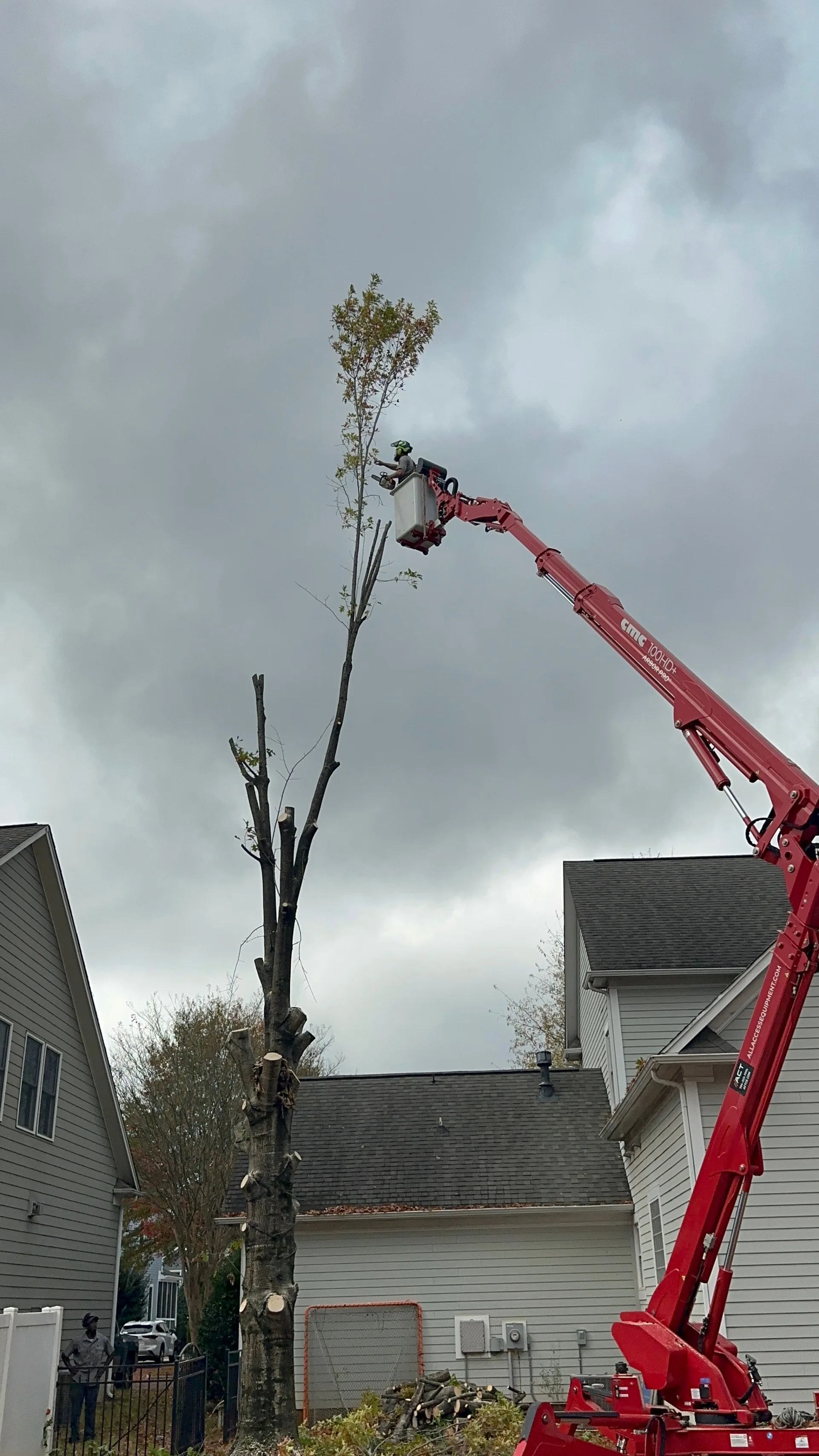
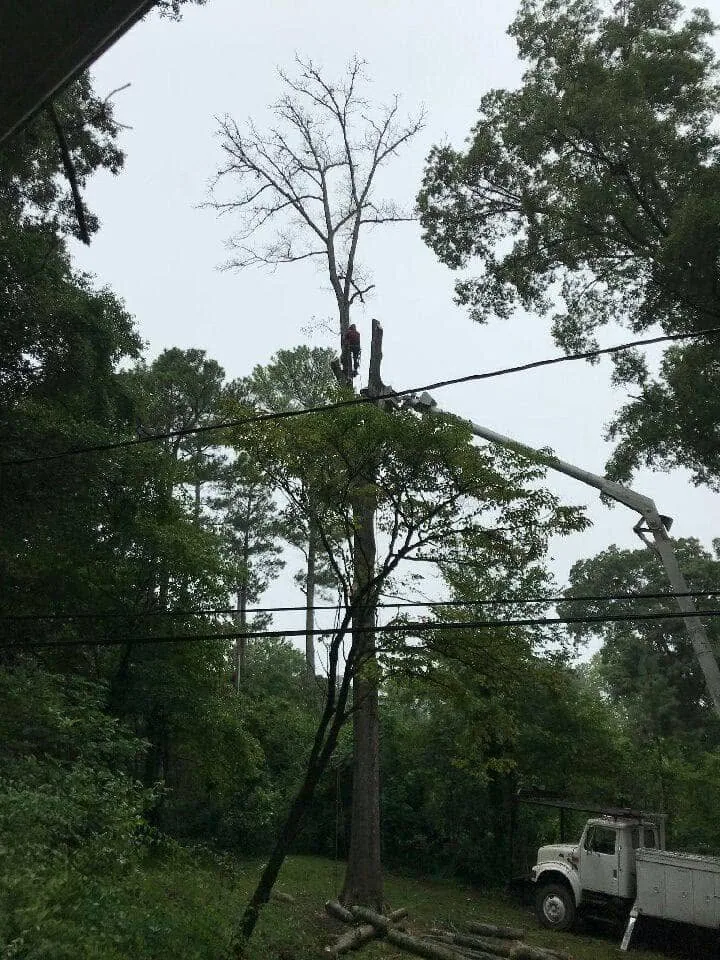
Dead tree removal is different from cutting a healthy tree. Dead wood dries out and turns brittle, so a limb that would bend in a living tree can snap without warning. Climbing a dead trunk puts a crew member on wood that may not hold, which is why we lean on our bucket truck for this work whenever it can reach the tree.
Dying tree removal calls for timing. A tree with half its crown bare in summer, or one that leafs out later each spring, is losing strength every season it stands. Removing it while some wood is still sound is safer and often simpler than waiting until it is fully dead, and it is one of the most common reasons for hazardous tree removal in Rock Hill yards.
Some species decline faster than others. The Clemson Home and Garden Information Center notes that water oaks are more weak-wooded than most oaks, prone to wind and ice damage, and that their trunks often rot by the time the tree reaches about 50 years old.
Leaning Tree Removal and When a Lean Turns Dangerous
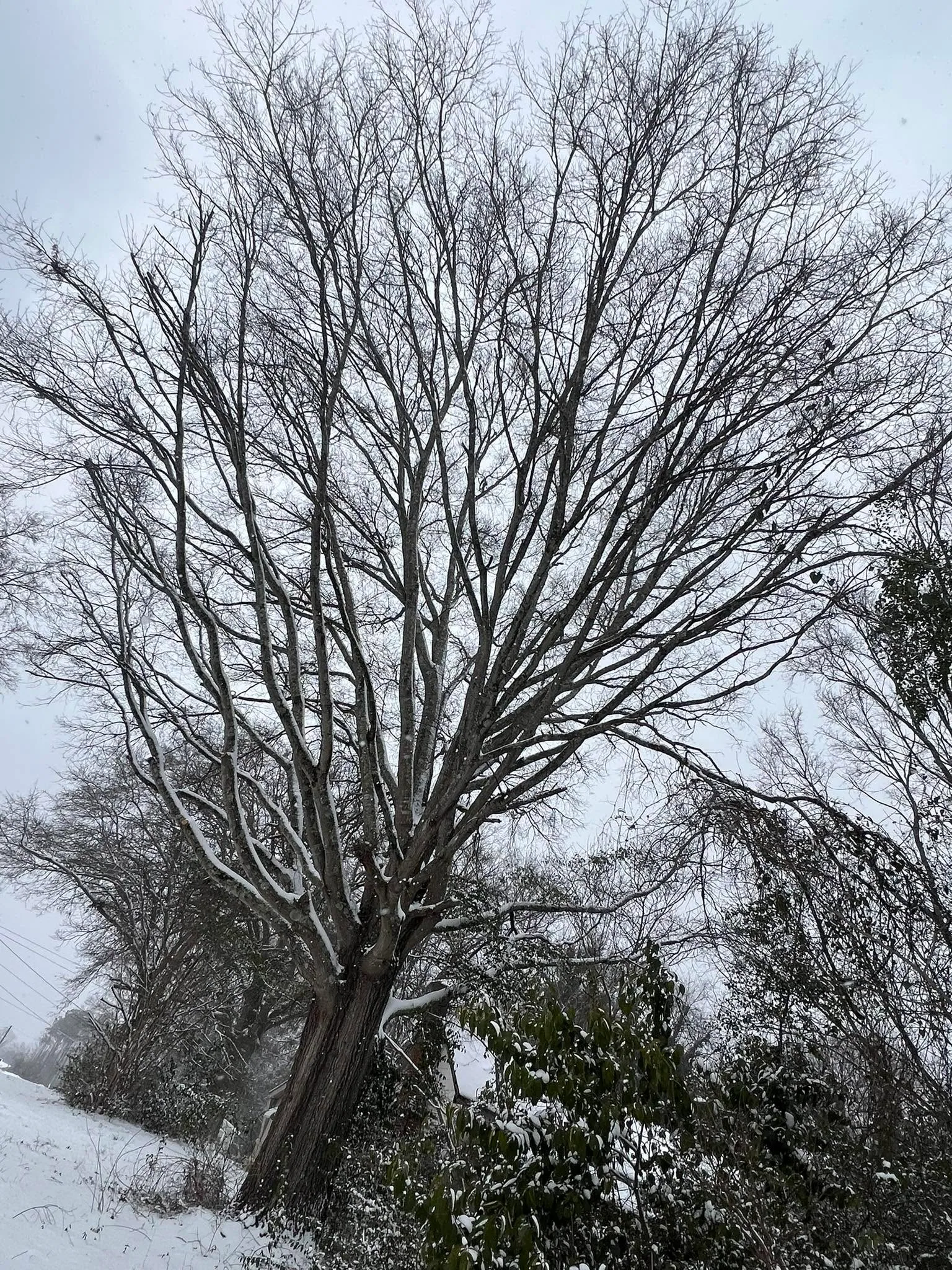
Many trees grow with a gentle lean toward the light, and that lean alone is not a problem. A lean becomes dangerous when it changes. A tree that tilts more after a storm, or one with soil lifting on the side away from the lean, may have roots that are letting go.
Saturated ground makes this worse. After days of heavy rain, the soil around the roots softens and loses its grip, and a tree that already leans can tip further under its own weight. If you see fresh cracks in the soil or exposed roots, keep people and vehicles out of the path and call us.
Leaning tree removal is planned around the direction of the lean, since the tree wants to fall that way. We control that weight with ropes and a careful cutting order, so the tree comes down where we choose rather than where gravity would take it.
Step by Step
Our Process for Hazardous Tree Removal in Rock Hill
A hazard tree leaves less room for error than a healthy one, so the plan matters more. Michael Smarr assesses every hazard tree himself, and he leads the crew on site during the removal.
-
Honest Hazard Assessment
We inspect the trunk, the crown, the root zone and everything within reach of the tree. You hear plainly whether removal is needed or whether trimming will do.
-
A Plan Around the Targets
We map what the tree could hit, then choose where each piece will be lowered and which equipment keeps the crew off weak or brittle wood.
-
Controlled Removal
The crew takes the tree down in sections, lowering heavy wood on ropes over roofs, fences and driveways, then drops the trunk once the area is clear.
-
Cleanup and Stump Options
Branches are chipped and wood is hauled away. The stump can be ground on the same visit or left for later.
Trim or Remove? An Honest Answer First
Not every hazard calls for a chainsaw at the base. A tree with one dead limb over the roof, or one carrying too much weight on a single side, can often be made safe with deadwood removal or weight reduction. We would rather save a healthy tree than remove one that did not need to go.
When the defect is in the trunk or the roots, trimming cannot fix it, and removal is the safer choice. A routine tree health assessment in Rock Hill can catch these problems early, before storm season adds wind and wet soil to the risk.
Every quote comes with a copy of our insurance certificate. You decide after hearing the honest answer, with no pressure to remove more than the tree needs.
What Shapes the Cost of Removing a Hazard Tree
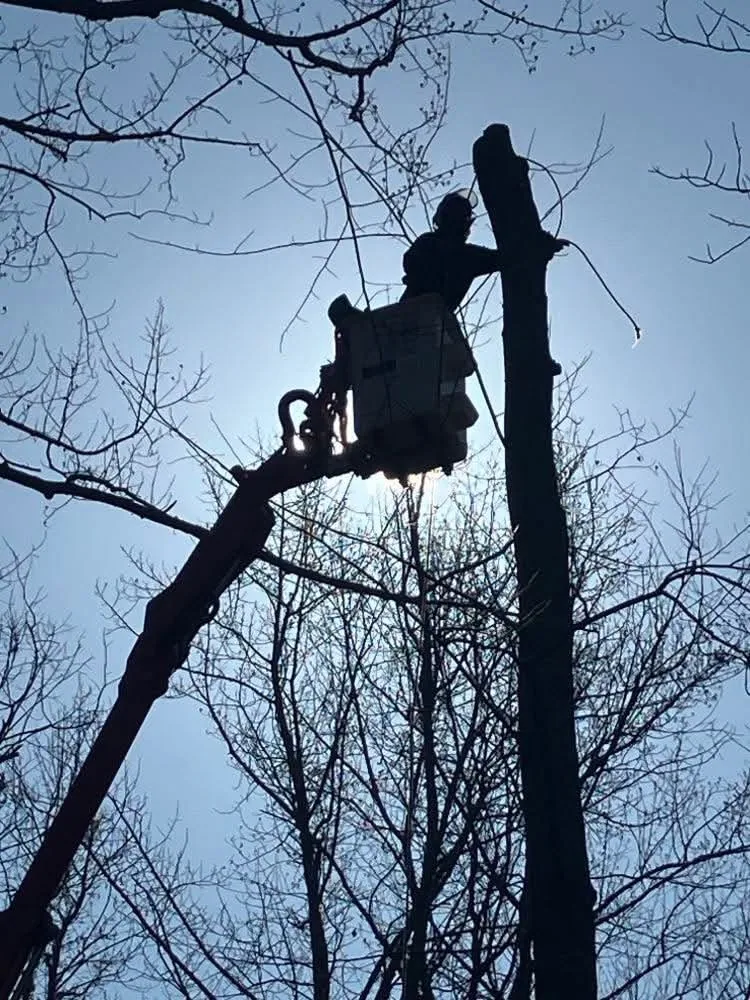
A hazard tree often costs more to remove than a healthy tree of the same size, because the wood cannot be trusted to hold rigging or a climber. Brittle limbs must be lowered more carefully, and a tree leaning over a house leaves no room to drop anything.
The main factors are the size of the tree, the type and location of the defect, what stands beneath it and how close the bucket truck can park. A tree in open ground with a clear fall path is the simplest case. A dead tree hanging over a roof line is the hardest, and it takes the most time and crew.
We quote every hazardous tree removal in Rock Hill on site for free, so you know the exact price before any work starts. Credit cards are accepted.
Hazard Tree Help Across Rock Hill and Nearby Towns
Hazard trees turn up everywhere we work, from shaded neighborhood lots to rural properties where an old tree has stood untouched for decades. Our home base in Edgemoor keeps the crew close to customers on both sides of the Chester and York County line.
We assess and remove hazard trees for homeowners in Rock Hill tree service, Edgemoor tree service, Lancaster tree service and Great Falls tree service. If a hazard tree has already come down on a house or a car, our emergency tree removal in Rock Hill crew handles fallen trees and storm damage. Planned removals of healthy trees fall under our main tree removal in Rock Hill, SC service.
Common Questions
Questions About Hazardous and Dead Trees
How can I tell if a tree is dead or just dormant in winter?
Scratch a small spot of bark on a twig with your fingernail. Green tissue underneath means the twig is alive, while brown and dry wood means it is dead. Check several branches in different parts of the crown. Twigs that snap cleanly instead of bending are another sign. If you are unsure, we can check the whole tree at a free assessment.
Is a cracked tree trunk always a reason to remove the tree?
Not always, though a cracked tree trunk is one of the most serious defects a tree can have. A shallow crack in the bark may be cosmetic. A deep split through the wood, especially one that opens and closes in the wind, means the trunk has lost strength. We look at the crack's depth, length and location before recommending removal.
Should I wait until a dead tree falls on its own?
No. A dead tree rarely falls cleanly. Limbs break off first and can drop without warning onto roofs, vehicles or people, and the trunk often comes down during the next strong wind. Dead wood also gets more brittle every season, which makes the removal more difficult and riskier for the crew the longer it waits.
Can a leaning tree be pulled back upright?
Large established trees cannot be safely straightened once they lean. A lean that develops suddenly usually means roots have broken or the soil has failed, and pulling on the tree can make that worse. Small young trees can sometimes be staked. For a mature tree with a new lean toward the house, removal is usually the safest answer.
Do dead trees attract pests to my other trees?
They can. Weakened and dead trees attract wood-boring insects and decay fungi, and some of those pests move on to stressed trees nearby. Removing the dead tree takes away that source. We also look at the surrounding trees during the assessment and tell you if any of them show the same early signs of decline.
Do Not Wait on a Hazard
Get a Dangerous Tree Off Your Mind
A tree with a crack, a fresh lean or a crown full of dead limbs only gets weaker. Call us or send a service request, and Michael will look at it, tell you honestly what it needs and quote the work for free.