Tall Pines
Pine Tree Removal in Rock Hill for Tall and Leaning Pines
Pine tree removal in Rock Hill for tall, dead and leaning pines near homes, sheds and driveways. We take them down in controlled sections and haul every log, limb and needle away.
Why Pines Need Their Own Removal Plan
Pines are everywhere in our part of South Carolina, and they behave differently from hardwoods when they come down. Clemson Extension calls the loblolly pine one of the most common pines in the state, and notes that mature loblollies average 80 to 100 feet tall. Shortleaf and Virginia pines are common across the Piedmont as well.
A pine carries most of its weight in a crown perched at the top of a long, straight trunk. That shape means a pine dropped whole travels a long way and lands hard, often farther than homeowners expect. On most residential lots there simply is not enough open ground to fell a mature pine in one piece, which is why pine tree removal in Rock Hill neighborhoods is nearly always done in sections.
Pines also drip sticky sap and shed heavy cones, which makes the cleanup a bigger job than the size of the branches suggests. We plan for both before the first cut.
Tall Pine Tree Removal Near Homes and Yards
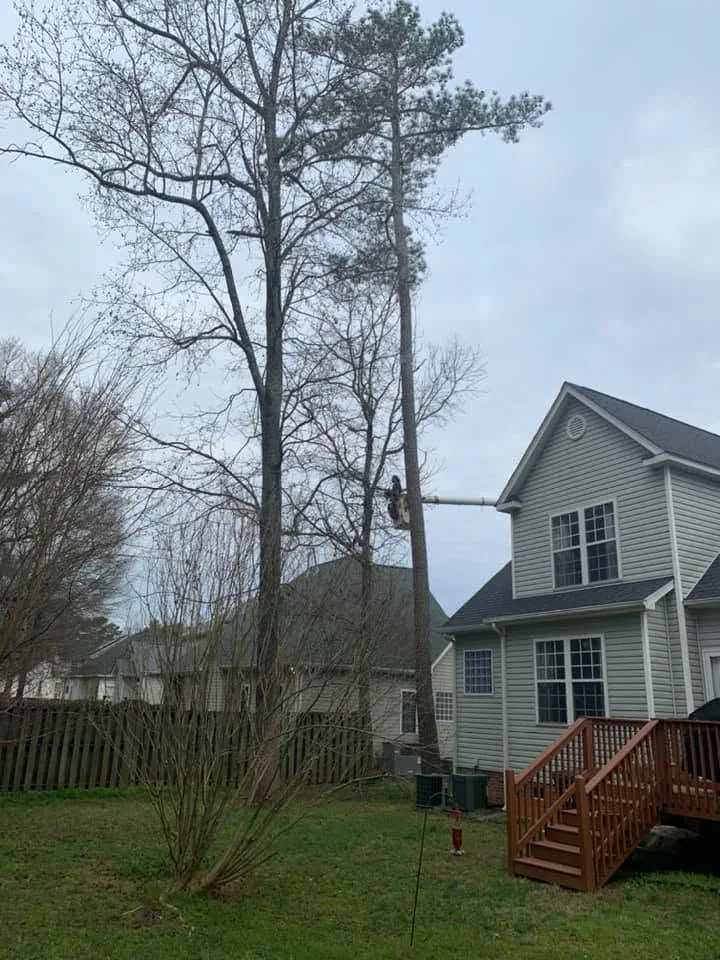
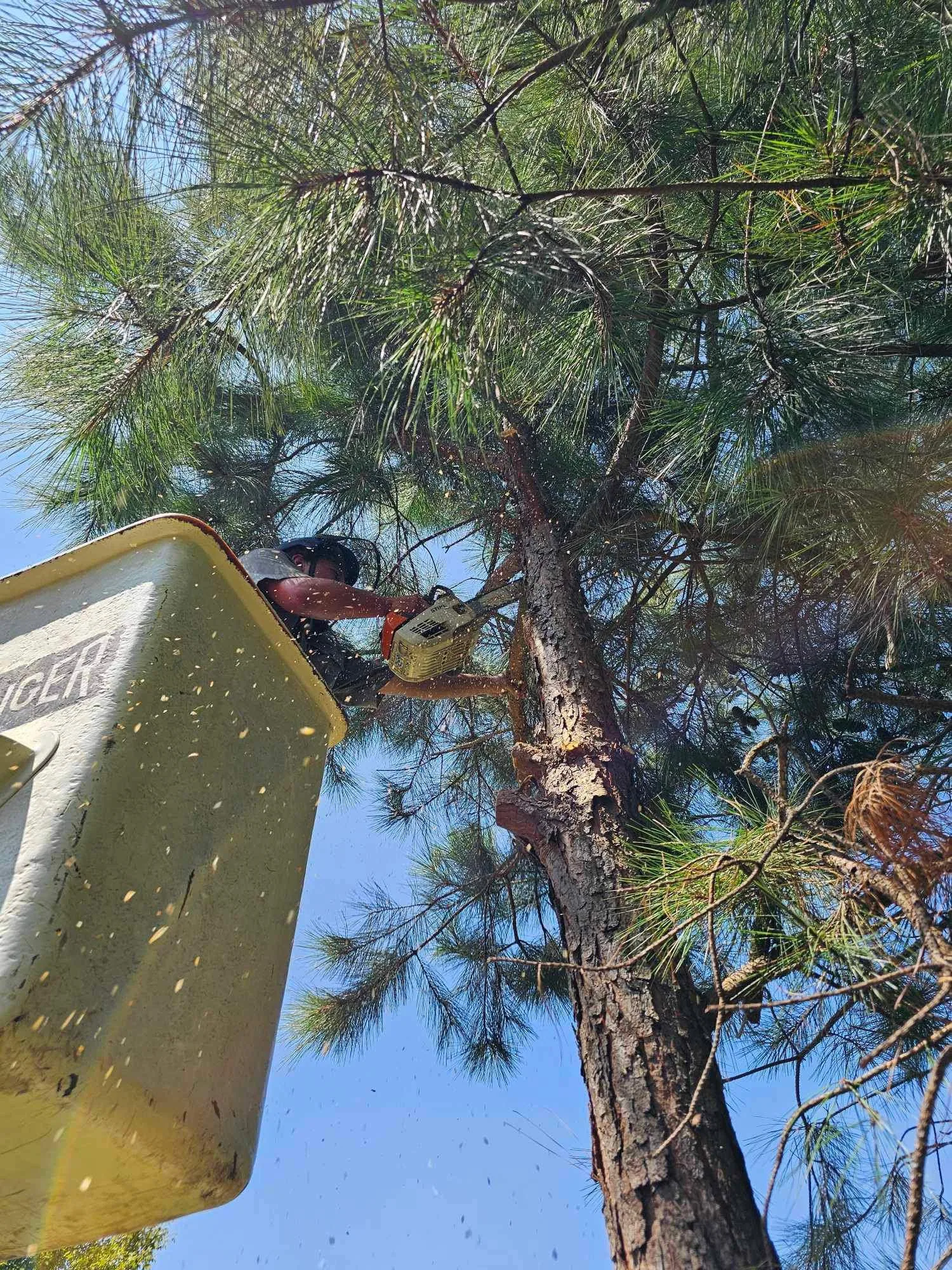
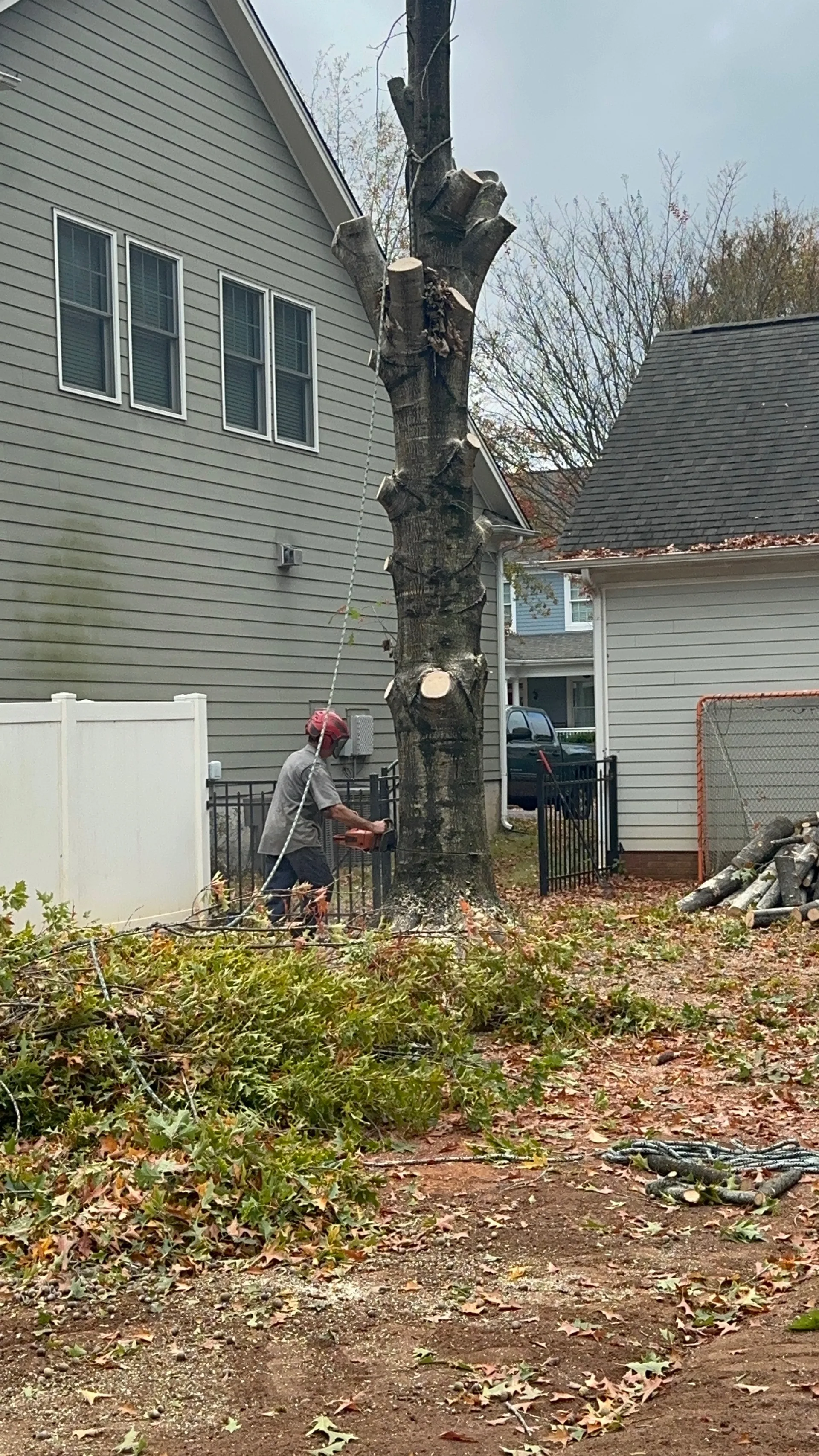
Tall pine tree removal on a typical lot is done from the top down. A climber or a crew member in the bucket truck removes the limbs first, then cuts the bare trunk into short sections. Each piece is either dropped into a clear landing zone or lowered on a rope when it hangs over a roof, a fence or a garden.
The bucket truck is our first choice when it can reach the tree, because it keeps the crew off the trunk entirely. For pines deep in a backyard, behind a fence or on a slope the truck cannot cross, our experienced climbers do the work with ropes and saddles.
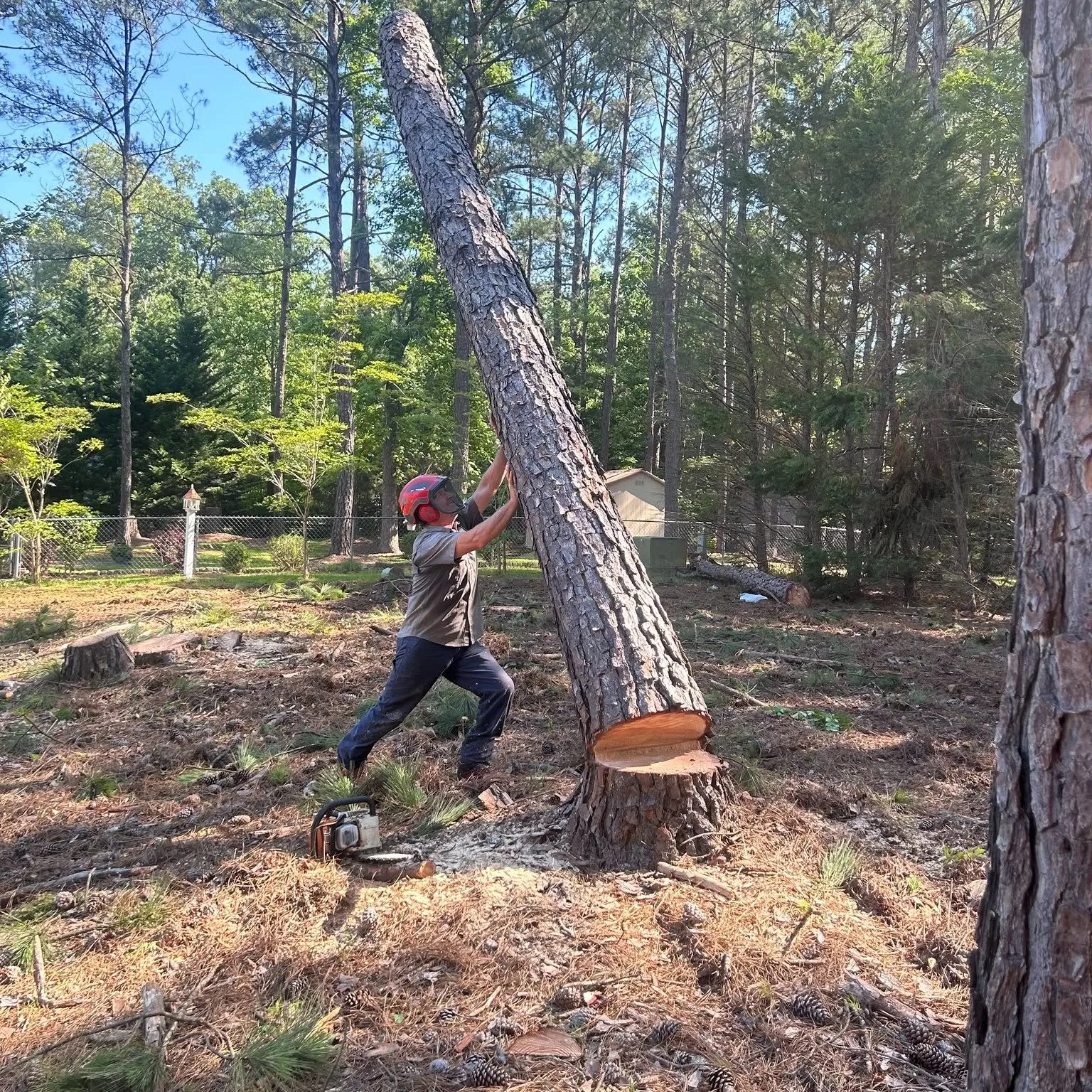
Once the trunk is short enough, and the landing zone is clear, the remaining section is felled. This piece-by-piece method takes more time than a single cut, and it is what keeps a 90-foot tree from ending up on a roof.
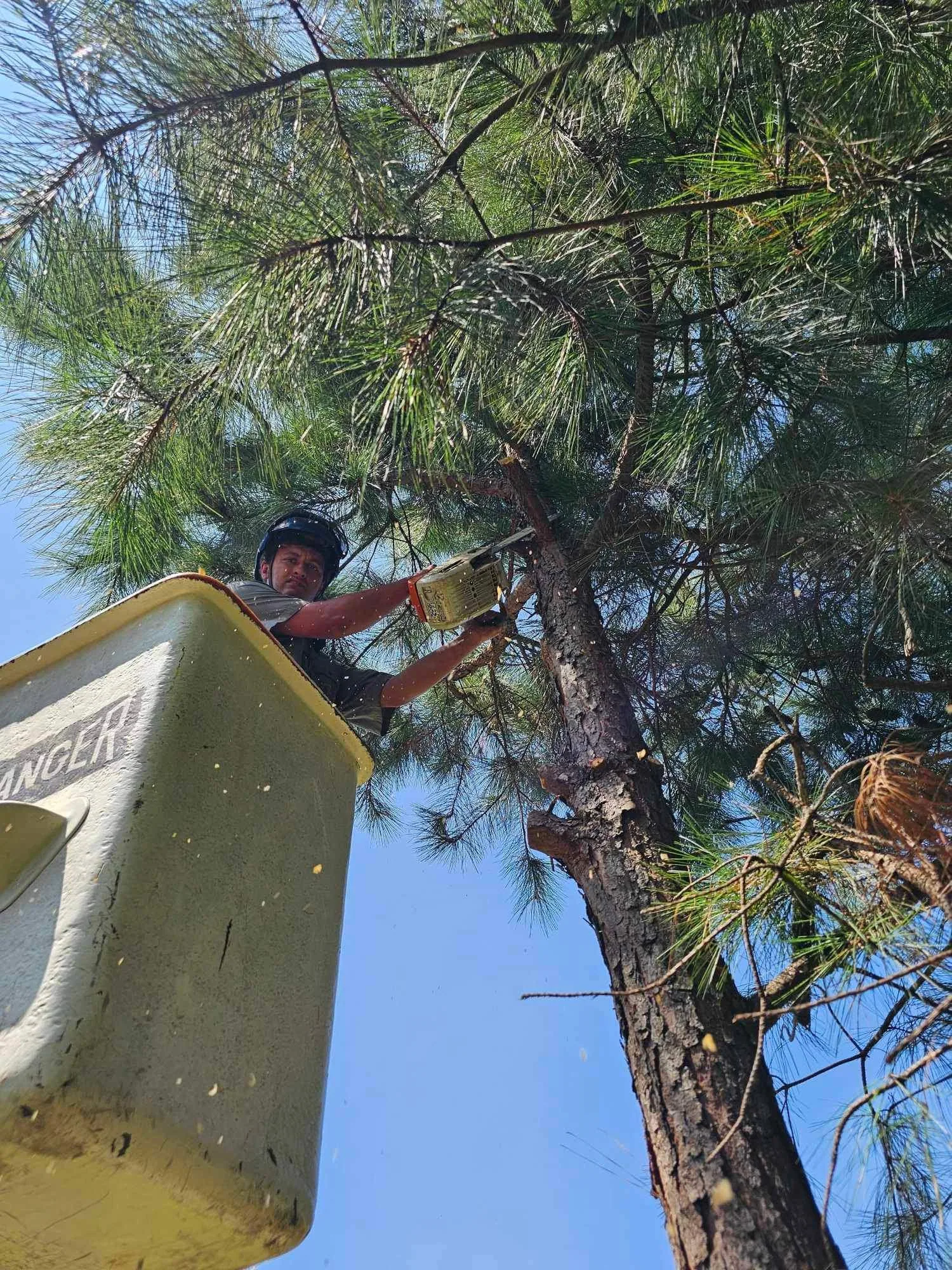
Dead Pine Tree Removal and Bark Beetle Signs
A dead pine is one of the more urgent jobs in pine tree removal in Rock Hill. Pine wood decays quickly once the tree dies, and a dead pine can lose its top or snap at the trunk with little warning.
Bark beetles are a common cause. According to Clemson Extension, signs of an attack include small popcorn-shaped lumps of pitch on the bark, brown sawdust in bark crevices and around the base, and needles turning from yellow to orange to red. By the time the whole crown has changed color, the tree is usually beyond saving.
Clemson also notes that removing injured or diseased pines lowers the chance of beetles moving into an area, and that felling can wound nearby pines. Dead pine tree removal is therefore done carefully, keeping the healthy trees around it free of fresh cuts and bark damage.
Is That Leaning Pine Tree Safe?
A leaning pine tree is worth watching closely. Pines that grow at a slight angle from the start are usually stable, because their roots have formed to support that lean. A pine that starts leaning after a storm or a stretch of wet weather is a different story, and the base of the tree usually shows it.
- Soil lifted or cracked on the side opposite the lean
- Roots pulling up out of the ground
- A fresh gap between the trunk and the soil
- A lean that is visibly worse than last month
- Standing water around the roots after heavy rain
Any of these suggests the root plate is moving, and a tall pine leaning toward a house should be looked at right away. Leaning pines are removed with the lean in mind. We take weight off the high side first, then control the trunk with ropes so it does not swing toward the house as it comes down.
How It Works
How Our Pine Tree Cutting Process Works
Pine tree cutting near a house is a step-by-step job, with the same plan every time. Michael Smarr is on site to lead the crew from the first limb to the final rake.
-
On-Site Pine Assessment
We check the height, the lean, the condition of the wood and everything a falling piece could reach, then give you a written quote at no charge.
-
Limbing From the Top
A climber or bucket truck removes the limbs from the crown down, so the trunk is bare and easier to control.
-
Sectioning the Trunk
The trunk is cut into short pieces, lowered or dropped into a clear zone, until the final section can be felled safely.
-
Hauling and Cleanup
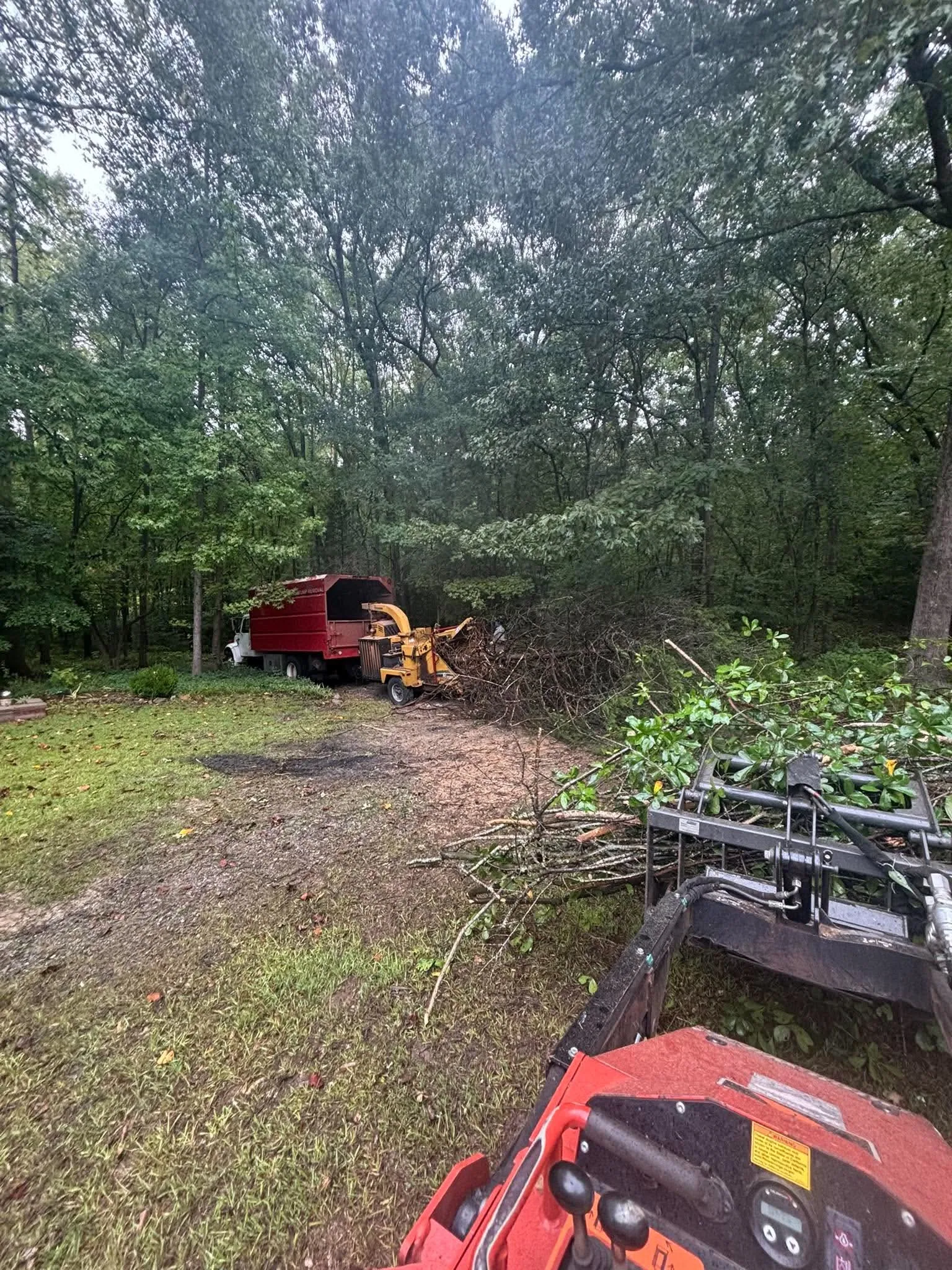
We chip the limbs, haul the logs and rake up needles, cones and sawdust before we leave.
Pine Removal Cost and the Cleanup That Follows
The price of a pine removal depends mostly on its height, how close it stands to buildings and whether the bucket truck can reach it. A pine in an open side yard is a quicker job. A tall pine between a house and a fence, with every section lowered on a rope, takes longer and needs more crew.
Dead pines can add time, because brittle wood must be handled with extra care. The amount of wood to haul matters too, since a single tall pine leaves a surprising pile of logs.
Stump grinding is often added to the same job. Pine stumps hold sap and can sit for years, and stump grinding in Rock Hill clears them below grade so the yard can be mowed. Every estimate is free and comes with a copy of our insurance certificate.
Pine Tree Removal in Rock Hill and Along the County Line
Pines fill the wooded lots and rural properties around our home base in Edgemoor, along the county line and out toward the Catawba River. They are just as common in the newer neighborhoods, where builders left a few tall pines standing close to the houses.
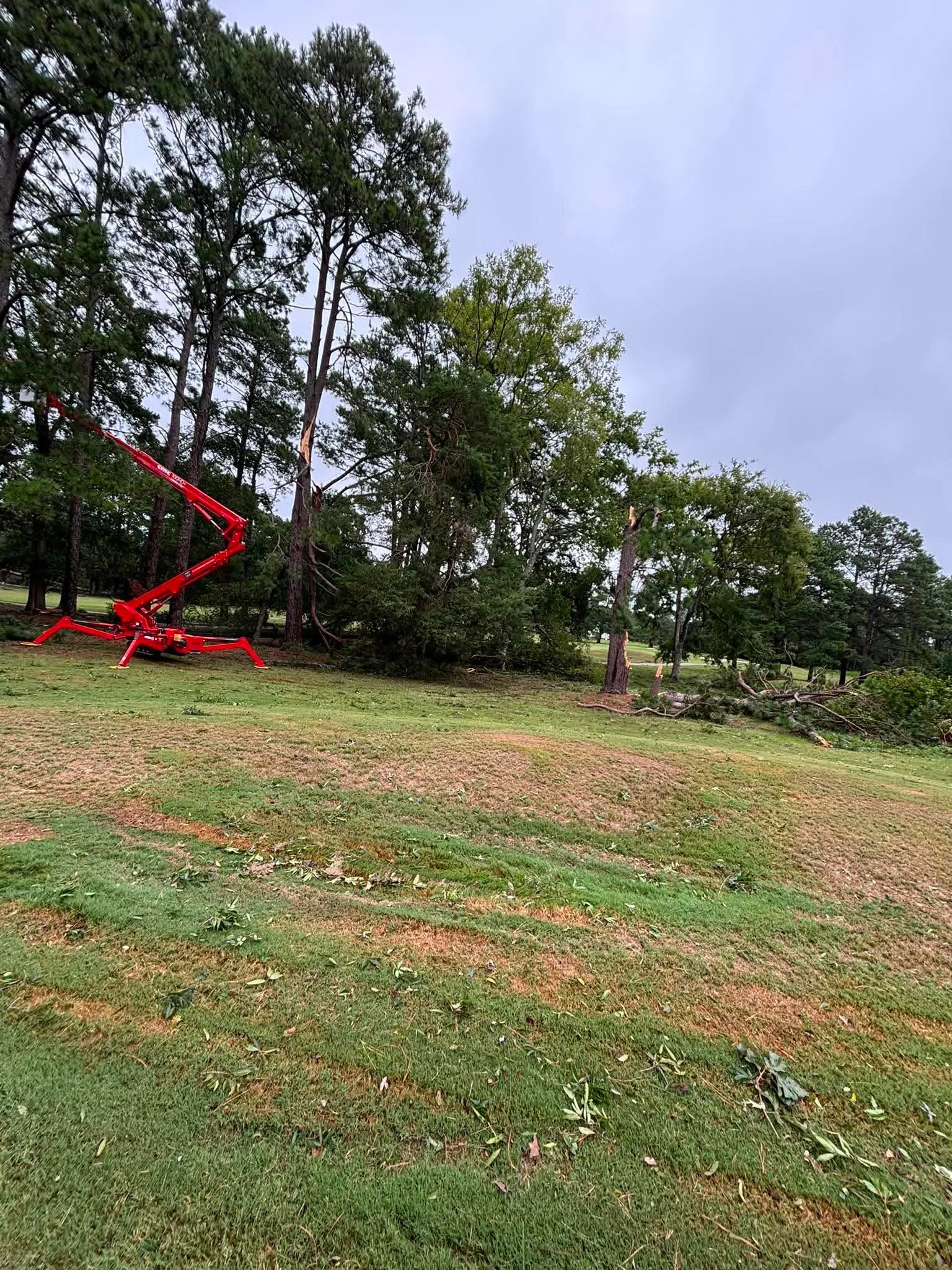
We remove pines for homeowners in Edgemoor tree service, Chester tree service, Clover tree service and York tree service. When a storm drops pine limbs and needles across the yard, our storm debris cleanup in Rock Hill crew clears the mess.
Every pine tree removal in Rock Hill and the surrounding towns is quoted on site, with a copy of our insurance certificate and the cleanup included. Other kinds of planned removals fall under our main tree removal in Rock Hill, SC service.
Common Questions
Pine Tree Removal Questions
Why do pines seem to fall more often in storms?
Tall pines catch a lot of wind in a crown that sits high above a long trunk, which puts heavy leverage on the roots and the lower stem. When the soil is soaked after heavy rain, the roots lose grip. Pines weakened by beetles or decay are more likely to snap. Healthy, well-rooted pines often ride out storms without trouble.
Can you remove a pine without a bucket truck?
Yes. When a pine stands where the truck cannot reach, such as behind a fence or down a slope, our experienced climbers do the work. They climb the tree with ropes and a saddle, remove the limbs and lower trunk sections piece by piece. Climbing takes longer than working from the bucket truck, though it reaches places no machine can.
My pine has brown needles. Is it dying?
Not always. Pines shed their older inner needles each fall, and those turn brown before they drop. Browning across the whole crown, or needles turning yellow, then orange, then red, is a more serious sign. Look for pitch lumps and sawdust on the trunk, which point to bark beetles. We can check the tree and tell you what we find.
Will you take the pine logs away?
Yes. Hauling the wood is part of every pine removal, along with chipping the limbs and raking up needles and cones. Long pine trunks are cut into sections the trucks can carry, so nothing is left lying in the yard. You are left with a clean, raked work area once the crew pulls out.
Should I remove pines that stand close to my house?
A healthy pine near a house is not automatically a problem. Distance, lean, health and the height of the tree all matter. A tall pine that could reach the roof, has a new lean or shows signs of decline is a good candidate for removal. We give an honest answer, including when a pine is fine to keep.
Free Pine Estimates
Take Down That Tall Pine the Safe Way
A dead or leaning pine near the house is not worth the worry. Call us or send a request, and Michael will measure up the tree, explain how we will take it down and give you a free written quote.